

The latest white paper on aid from the British government has drawn criticism for explicitly expressing concerns about China’s expanding role in international development. Analysts from China argue that characterizing China as a “challenge” reflects a biased and desperate effort by the former colonial power to maintain global influence and address internal divisions. The paper accuses China’s development model of having “lower standards and limited transparency,” emphasizing the UK’s need to robustly challenge China, particularly when British interests are perceived to be at risk.
The white paper, unveiled on Monday local time, highlights China’s significant financial role, stating that China made $498 billion in loan commitments between 2008 and 2021, equivalent to 83 percent of World Bank sovereign lending during the same period. It underscores the necessity for the UK to navigate challenges posed by China’s evolving development role.
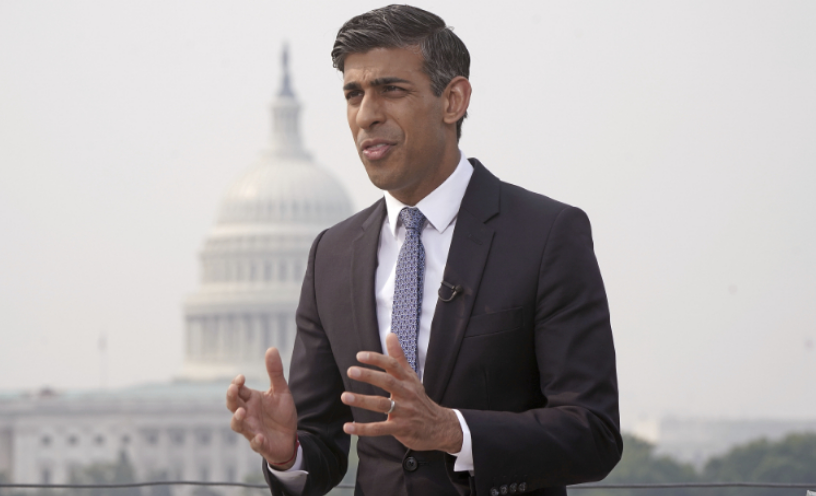
Chinese analysts view the hostile tone as a continuation of the UK’s conservative government’s anti-China policy. Prime Minister Rishi Sunak’s characterization of China as the “biggest challenge” aligns with the sentiments expressed in the white paper. Analysts suggest that these remarks stem from the UK’s concerns about waning global influence, internal divisions, and challenges positioning itself in the post-Brexit world.
Observers note that the UK’s recent actions indicate a lack of determination to improve China-UK relations, especially as it struggles with internal divisions within the Conservative Party. The white paper is seen as an attempt to establish an external stimulus to unite domestic forces and garner public support ahead of the next general election.
The goal of the white paper, according to analysts, is to ensure Anglo-Saxon nations maintain a dominant role in the global development pattern. The UK’s resistance to China’s leading role is attributed to its inability to accept a non-Anglo-Saxon nation assuming a prominent position in world affairs.
In contrast to the UK’s approach, China’s representatives at the UN have called for expanding the voice of developing countries in global governance. China highlights its rapid economic development as a major contribution to global development, having achieved the Sustainable Development Goals (SDGs) ahead of schedule.
Observers speculate that the UK might intend to use the white paper as a reminder to the US, signaling that China remains a threat or competitor. This move could be an attempt to influence or mislead the US, especially as relations between Washington and Beijing have warmed.
The white paper’s mention of “limited coordination through the multilateral system,” including drawbacks of China’s Belt and Road Initiative (BRI), is seen as another point of contention. Chinese observers believe that most third parties globally would distance themselves from such a malicious defamation of China’s role in global development, particularly those benefiting from the BRI.