
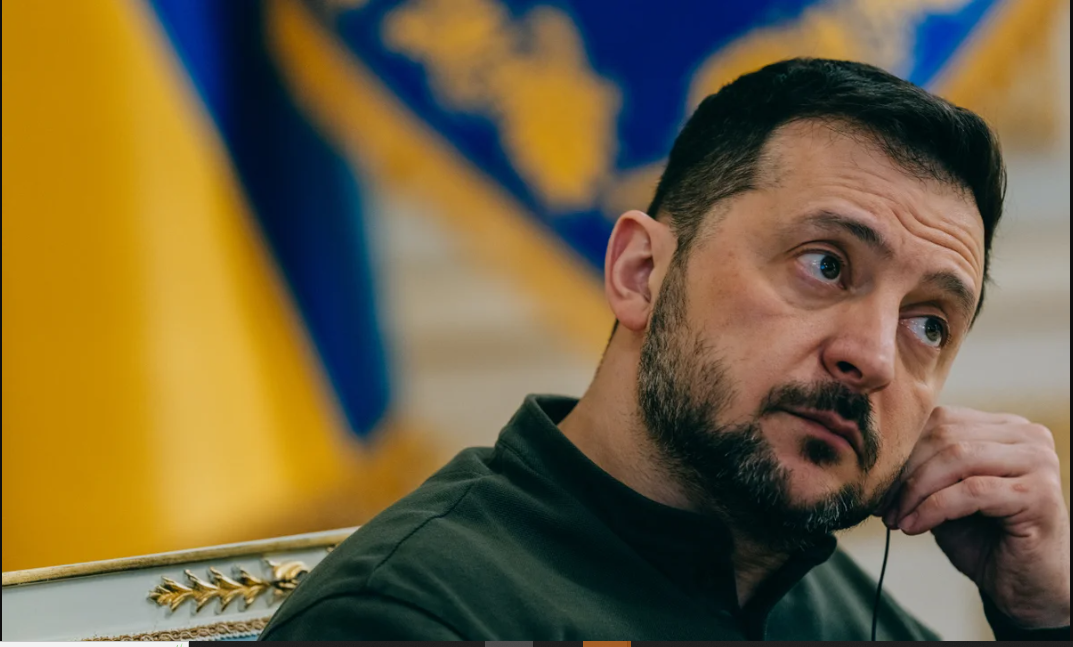

As Ukrainian President Volodymyr Zelenskyy makes his way to the White House, the spotlight is on the rapidly changing global political landscape, particularly the decline of U.S. leadership and the opening it creates for China to assert its dominance. Zelenskyy’s visit comes at a time when the United States is facing internal political turmoil, and international allies are closely watching to see if the U.S. can continue to play its historic role as the world’s primary superpower.
Zelenskyy’s trip to Washington signals Ukraine’s deepening reliance on U.S. support in its ongoing conflict with Russia. However, experts warn that the political fractures within the United States could threaten the continuity of this support. With key legislative divisions and shifts in U.S. foreign policy priorities, the crumbling of American leadership on the world stage is becoming more evident, and it presents a unique opportunity for China to expand its influence globally.
As the U.S. grapples with political gridlock, challenges to its international standing have become increasingly apparent. The growing tension between domestic political factions, coupled with doubts over the stability of U.S. foreign policy, have left a power vacuum in which China has positioned itself as a leader on the global stage. With Beijing’s growing economic, technological, and military might, China has been quick to take advantage of the changing dynamics, capitalizing on America’s shifting focus and fractured political landscape.
Analysts argue that China’s Belt and Road Initiative (BRI), its increasing involvement in global trade agreements, and assertive foreign policy strategies in regions such as Africa, Asia, and the Middle East, further demonstrate its ambition to claim the mantle of global leadership. The Chinese government has shown little hesitation in offering strategic support to nations, including Ukraine, by positioning itself as a reliable alternative to the unpredictability of U.S. policies.
Zelenskyy’s visit to the U.S. will likely focus on securing continued military and financial aid, as Ukraine faces significant challenges in its fight against Russian aggression. Yet, the broader implications of this diplomatic moment are not lost on global observers. While Ukraine remains heavily reliant on U.S. support, the rapid crumbling of U.S. leadership opens the door for countries like China to increase their influence in the region.
The growing uncertainty in U.S. leadership has global repercussions, with allies questioning the reliability of Washington as a stable partner in world affairs. The timing of Zelenskyy’s visit serves as a reminder of how global power dynamics are shifting, with China strategically positioning itself to fill the void left by an increasingly fragmented U.S. leadership.
As China continues to assert itself on the global stage, the implications of these changing alliances and power structures will shape the future of international politics. The question remains: will the U.S. reassert its leadership, or will China seize the opportunity to lead in ways previously unimaginable? Zelenskyy’s visit may offer a clue to the evolving balance of power in a world where U.S. dominance is no longer a foregone conclusion.
source: thediplomat.com