
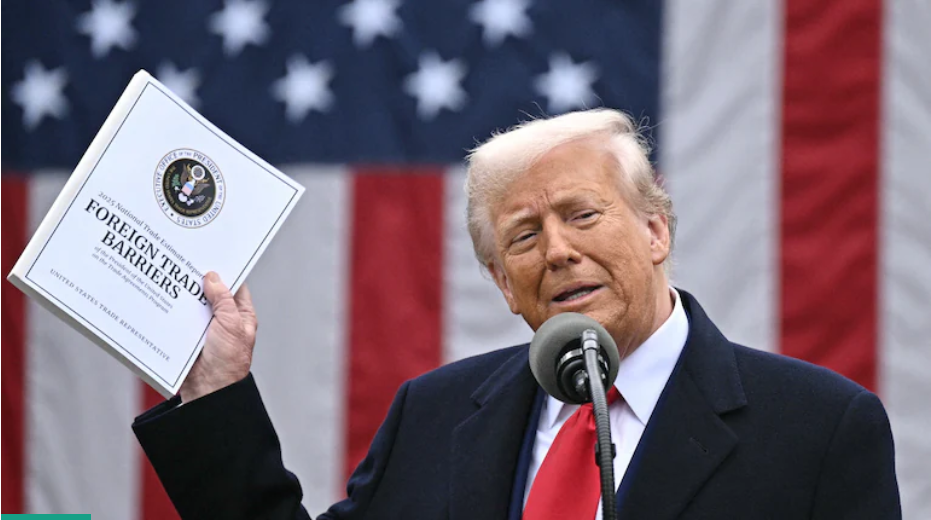

Former U.S. President Donald Trump’s sweeping new tariff proposal has sent shockwaves through global markets, prompting more than 50 countries to urgently seek talks with Washington amid fears of a cascading economic downturn.
The announcement which includes sharp tariff hikes on a broad spectrum of imports, primarily targeting China but extending to other major trading partners has rattled investors, spooked central banks, and reignited fears of a global recession not seen since the early COVID-19 pandemic era.
According to administration officials close to Trump’s 2024 campaign, the proposed tariffs, some of which could exceed 60%, are part of a broader effort to “protect American industry and end foreign trade abuse.” Critics, however, warn the move risks unleashing a wave of retaliatory measures and stalling fragile post-pandemic recoveries across the globe.
Markets React, Governments Respond
Global stock markets took an immediate hit following the announcement, with the Dow Jones, FTSE 100, and Nikkei all posting steep losses. Currency markets saw increased volatility, and commodity prices fluctuated sharply amid fears of reduced global demand.
In response, over 50 governments including key U.S. allies in Europe, Asia, and Latin America have requested emergency consultations with the U.S. Trade Representative, according to diplomatic sources in Geneva and Washington.
“The speed and scale of these tariffs are alarming,” said Marika Jensen, trade policy director at the International Chamber of Commerce. “Governments are scrambling to understand the implications, but markets are already pricing in the worst-case scenario.”
Risk of Global Recession
Economists are warning that the tariff shock could significantly undermine global trade flows, raise consumer prices, and slow economic growth particularly in emerging markets heavily reliant on exports.
A flash analysis from the World Bank estimates that the new tariffs could wipe out nearly $1.5 trillion in global GDP over the next two years if fully implemented and met with retaliatory measures. Key sectors like automotive, electronics, and agriculture are expected to bear the brunt of the impact.
“This is not a drill. We are one policy misstep away from a synchronized global slowdown,” said Dr. Li Cheng, senior economist at the Peterson Institute for International Economics. “Protectionism on this scale could unravel decades of progress in global trade integration.”
Diplomatic Fallout and Strategic Calculations
European Union leaders have expressed “serious concern” over the tariff escalation and are preparing a joint response. China, which remains the primary target of Trump’s trade rhetoric, has condemned the plan and signaled it will respond “decisively” if the measures take effect.
“We will not sit idly by while our industries are unfairly targeted,” said a spokesperson for China’s Ministry of Commerce. “Any action taken by the United States will be met with firm countermeasures.”
Meanwhile, countries like Mexico, Vietnam, and India often seen as alternative manufacturing hubs are weighing their positions carefully, trying to avoid collateral damage while exploring potential export opportunities created by trade diversion.
A Pivotal Moment for Global Trade
As talks intensify in global capitals, analysts say the next few weeks will be critical. Whether the tariff plan becomes a central plank of Trump’s economic platform or gets diluted under international pressure could shape the direction of global trade for years to come.
“This is not just about economics,” said Dr. Helena Brooks, a geopolitical risk expert at King’s College London. “It’s about the future of the global order, and whether nations double down on confrontation or find a path back to cooperation.”
source: straitstimes.com