
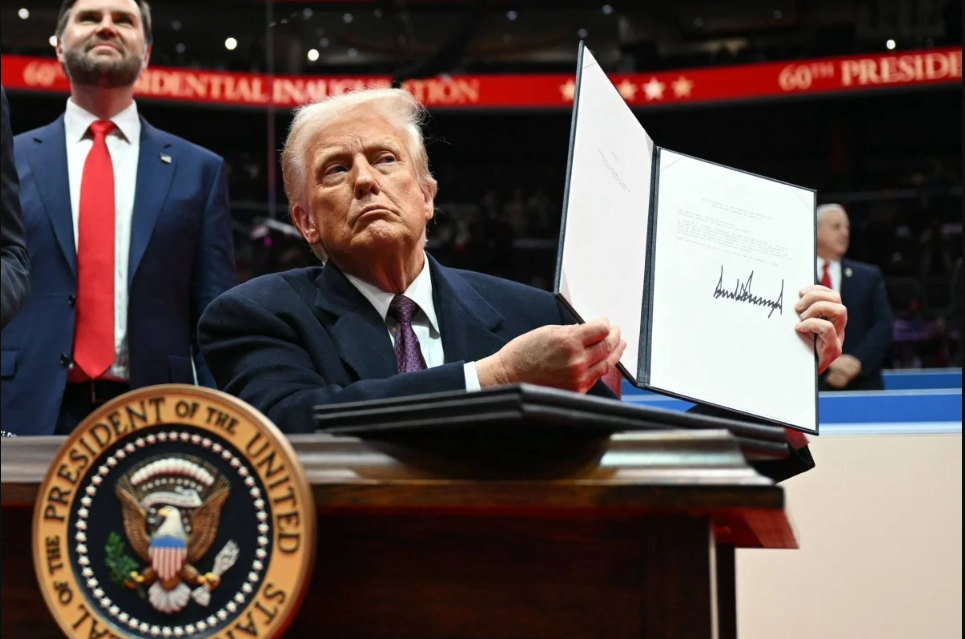

In a development that signals a significant shift in global climate diplomacy, the United States has officially exited a major international climate agreement, paving the way for China to solidify its position as a key environmental and economic partner for Indonesia.
The U.S. withdrawal, which has drawn criticism from environmental groups and international allies, marks a step back from collective global efforts to combat climate change. This decision has created a vacuum in leadership that China appears eager to fill particularly in Southeast Asia, where environmental challenges and infrastructure needs are pressing.
Indonesia, one of the world’s largest carbon emitters and a nation highly vulnerable to climate change impacts, has swiftly responded to this shift by strengthening its collaboration with Beijing. Chinese officials have ramped up engagement with Jakarta, offering support for green infrastructure projects, renewable energy investments, and sustainable development initiatives under the Belt and Road framework.
Analysts say China’s growing involvement positions it as a pragmatic alternative for countries seeking climate financing and technology transfers amid the waning influence of U.S. policy in the region. “This is a strategic recalibration,” noted Dr. Retno Wirawan, an energy policy expert based in Jakarta. “With the U.S. stepping back, Indonesia is turning to a partner that is not only willing to invest but also keen to shape the future of clean energy in Asia.”
The partnership is expected to cover sectors such as hydropower, solar, and electric vehicle infrastructure, with several high-level meetings already taking place between Chinese and Indonesian officials. Jakarta’s decision to lean on Beijing also reflects a growing regional trend, as other ASEAN countries weigh their options in a shifting geopolitical and environmental landscape.
Critics of the U.S. move argue that stepping away from multilateral climate commitments undermines its global leadership and weakens the collective ability to meet targets set under the Paris Agreement. Meanwhile, China’s assertive diplomacy has enabled it to portray itself as a champion of green development, despite its own challenges with domestic emissions.
As global climate stakes rise, Indonesia’s pivot toward China illustrates not only a reordering of environmental alliances but also a broader geopolitical transformation that could redefine power dynamics in the Global South.
source: en.tempo.co