
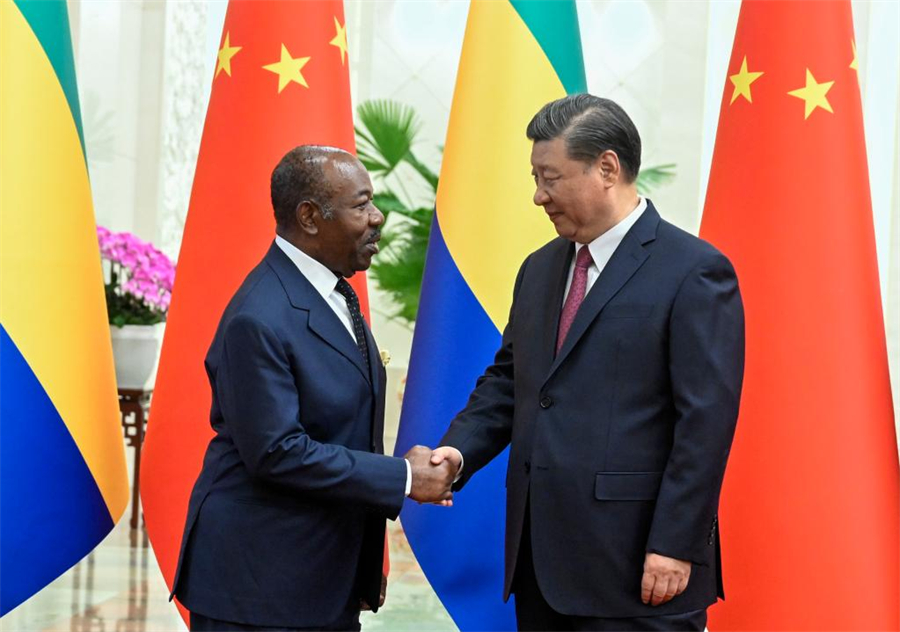

Chinese President Xi Jinping has been actively engaged in diplomatic efforts, aiming to build upon previous successes and achieve new milestones. In a series of meetings held in Beijing on Tuesday, President Xi met with visiting Prime Ministers from various countries, including New Zealand, Barbados, Vietnam, and Mongolia.
During the meeting between President Xi and New Zealand’s Prime Minister Chris Hipkins, both leaders expressed their commitment to expanding cooperation in multiple areas. Their discussions focused on enhancing economic and trade relations, promoting educational exchanges, advancing technological collaboration, boosting tourism, and fostering people-to-people and cultural interactions. The meeting highlighted the significance of the China-New Zealand relationship, which has consistently been at the forefront of China’s engagements with developed nations. President Xi emphasized the importance of maintaining the spirit of excellence and striving for the best, while further consolidating and deepening the comprehensive strategic partnership between China and New Zealand. Notably, 2022 marked the 50th anniversary of diplomatic relations between the two countries.
President Xi’s meetings with other visiting leaders also aimed to strengthen ties and explore avenues for cooperation. The discussions underscored China’s commitment to diplomacy and its pursuit of constructive relationships with nations around the world. Building upon previous diplomatic achievements, President Xi and his counterparts engaged in meaningful dialogues, addressing key areas of mutual interest and concern.
China’s diplomatic efforts in the summer have proven to be productive, with President Xi Jinping actively engaging with global leaders to foster stronger relationships and achieve diplomatic milestones.

During the meeting with Mottley, Xi noted that Barbados is the first country in the Eastern Caribbean to establish diplomatic relations with China, and is also a good friend and partner of China in this region. He called on the two countries to deepen political mutual trust and continue to understand and support each other on issues concerning each other’s core interests and major concerns. China, as always, supports Barbados in safeguarding national sovereignty and independence, and independently choosing a development path, Xi noted.

China and Mongolia vowed to enhance cooperation in various fields, including combating desertification, building the China-Mongolia-Russia Economic Corridor, and the construction of the Belt and Road Initiative. China and Mongolia are both developing countries and share extensive common interests and similar positions in international and regional affairs. China supports Mongolia in playing an active role in regional and international affairs, Xi noted.

This year marks the 15th anniversary of the establishment of the China-Vietnam comprehensive strategic cooperative partnership. Xi said that, facing the increasingly severe and complex international situation, China and Vietnam should uphold the spirit of equality, mutual benefit, solidarity and mutual trust, win-win cooperation, and should work together to seek common development, better benefit the two countries, and inject more stability into the turbulent world.
Pham Minh Chinh said that Vietnam opposes the politicization of economic issues, and is willing to work closely with China to prevent and deal with risks and challenges, prevent any force from alienating Vietnam-China relations, and build a Vietnam-China comprehensive strategic cooperative partnership with a shared destiny.
Barbados, Mongolia, New Zealand, and Vietnam are located on different continents, and have different political systems, histories, cultures, stages of development, and economic sizes. China’s efforts to improve ties with these countries show that the world will be further connected with each other. Members of the international community want to seek certainties and possibilities from China, and they will not follow moves to “decouple” or provoke “confrontation” launched by the US against China, experts noted.
New Zealand – a member of the US-led Five Eyes Alliance and an Anglo-Saxon nation – attaches great importance to developing relations with China. This time, as Hipkins is accompanied by a large economic and trade delegation, the trip aims to explore more cooperation opportunities and promote New Zealand-China relations to a new level, the New Zealand Prime Minister said during the meeting with Xi.
Chinese experts praised the independent policymaking of New Zealand which shows the consensus shared by different political parties within the country on how to get along with China. It presents an example of how Western countries can withstand the pressures of unilateralism, Cold War mentality, and hegemony, as well as preserve their strategic autonomy to develop ties with China and benefit their people.
Compared with other members of the Five Eyes Alliance – the US, the UK, Australia, and Canada, New Zealand is a country that is able to maintain equal and pragmatic relations and mutual respect with China, and bilateral ties have not been impacted by the China-US tension for a very long time.
In April 2022, during the term of Hipkins’ predecessor Jacinda Ardern and a difficult for the world due to the COVID-19 pandemic, the two countries upgraded the protocol of the China-New Zealand Free Trade Agreement.
After Ardern resigned in January, Hipkins, also from the Labor Party of New Zealand, assumed office, and Ardern’s strategic autonomy and pragmatic policy on China have been maintained and further developed.
According to Reuters, Hipkins, ahead of his trip to China, said on Thursday that he did not agree with US President Joe Biden’s absurd and provocative remarks on the Chinese national leader and political system. “The form of government that China has is a matter for the Chinese people,” Hipkins told reporters.
This shows that the government of New Zealand and the policymakers of the country have held a principle of non-interference when dealing with China, and refused to follow the arrogant and offensive attitude of Washington, while Wellington is able to develop ties with China based on the interests of New Zealand’s people, analysts said.
Chen Hong, director of the New Zealand Studies Center at East China Normal University, told the Global Times on Tuesday that “Hipkins’ visit shows the resilience of China-New Zealand ties. New Zealand is a small country, but it didn’t choose to abandon its autonomy to blindly and unconditionally follow the instructions of a superpower, but has preserved its pragmatic policymaking.” This is why the country can continue to benefit from its ties with China and avoid the damage caused by the US-led confrontation with China.
If other countries around the globe, especially Western ones, can learn some wisdom and experience from New Zealand’s policy on China, the global recovery will be greatly optimized, the world order will be a lot more stable and the danger of bloc confrontation and the risks of more geopolitical crises will significantly reduce, said Li Haidong, a professor at the China Foreign Affairs University.