
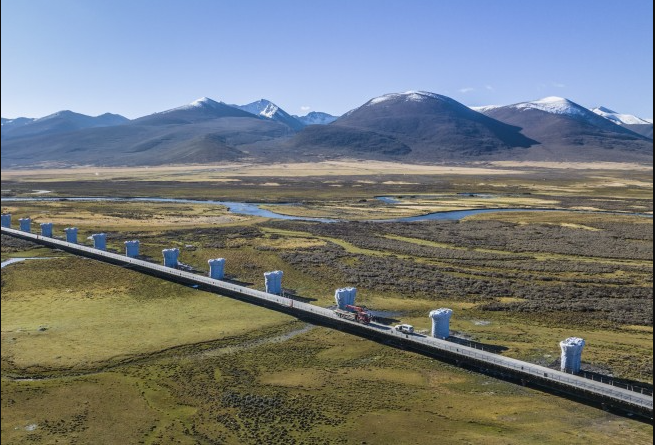

China has unveiled plans to accelerate infrastructure development in Tibet, signalling its determination to turn the Himalayan region often described as the “roof of the world” into a hub for investment, connectivity, and sustainable growth.
Officials in Beijing said the initiative will focus on expanding transport networks, energy facilities, and digital infrastructure to boost economic activity while strengthening links between Tibet and the rest of China. The move comes amid broader national efforts to channel resources into remote and strategically sensitive border regions.
Key projects include the extension of high-speed rail lines, upgrades to airports serving major Tibetan cities, and the expansion of hydropower capacity to harness the region’s vast water resources. Authorities are also prioritising renewable energy, with solar and wind projects planned to reduce reliance on traditional fuels and to support China’s climate goals.
“The infrastructure push will not only improve the quality of life for people in Tibet but also make the region more attractive to domestic and international investors,” said Vice Premier He Lifeng during a policy briefing in Beijing. He added that Tibet’s geographic position makes it a vital gateway for trade with South Asia.
Beijing has long argued that modernisation in Tibet is key to promoting development and stability. However, human rights groups have raised concerns, warning that large-scale projects could accelerate cultural assimilation and disrupt traditional Tibetan livelihoods. Environmentalists have also questioned the ecological cost of hydropower and rail expansion in one of the world’s most fragile ecosystems.
Despite these concerns, China’s leadership appears determined to press ahead, framing Tibet’s transformation as part of the nation’s long-term economic strategy. Local officials have already reported rising tourist numbers, increased trade volumes, and new business opportunities linked to the rollout of improved infrastructure.
Analysts say the initiative could have geopolitical implications as well, enhancing China’s ability to project influence across its Himalayan frontier. “Strengthening infrastructure in Tibet isn’t just about development,” noted Dr. Mei Zhang, a Beijing-based policy expert. “It also has strategic importance given the region’s proximity to India and other South Asian markets.”
With billions of yuan earmarked for investment, Tibet is set to play a more prominent role in China’s economic map. Whether the ambitious push delivers long-term prosperity without eroding the region’s delicate cultural and environmental balance remains an open question.