
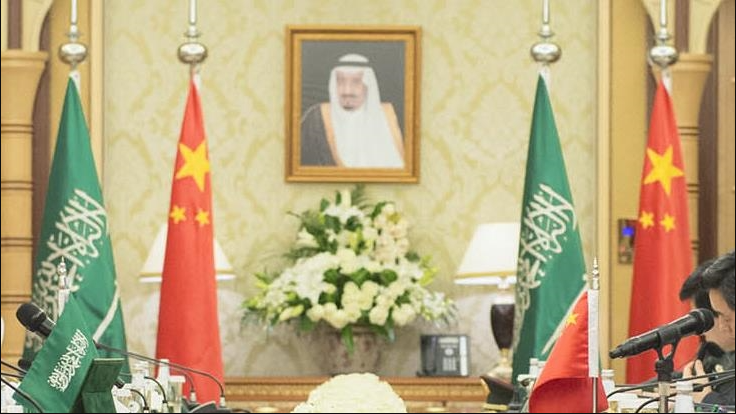

China and Saudi Arabia have pledged to deepen bilateral cooperation and jointly uphold the multilateral trading system, as both nations seek to reinforce their roles in a rapidly shifting global economy.
The commitment came during high-level talks in Beijing, where officials from the two sides outlined plans to expand collaboration in energy, infrastructure, technology, and investment. Both governments reaffirmed their support for the World Trade Organization (WTO) and stressed the importance of an open and rules-based trading order.
Chinese Foreign Minister Wang Yi hailed the partnership as “strategic and forward-looking,” highlighting Beijing’s interest in working with Riyadh on renewable energy, digital economy ventures, and Belt and Road Initiative (BRI) projects. “Our cooperation goes beyond oil and energy it is about innovation, connectivity, and shared development,” Wang said.
Saudi officials, led by Foreign Minister Prince Faisal bin Farhan, underscored the kingdom’s commitment to diversifying its economy under Vision 2030 and welcomed China’s role as a long-term partner. “China is central to our efforts to build a more resilient and dynamic Saudi economy,” Prince Faisal noted, adding that the two countries would continue to coordinate closely on regional stability and global trade issues.
The talks also touched on financial cooperation, with both sides expressing interest in greater use of local currencies in trade settlements, a move analysts say could reduce dependency on the US dollar and strengthen economic sovereignty.
Analysts believe the renewed pledge underscores the growing weight of China-Saudi ties in the context of shifting geopolitical alignments. For China, deeper ties with Riyadh provide energy security and investment opportunities, while for Saudi Arabia, the partnership helps balance relations with both Western allies and emerging powers.
At the multilateral level, both countries reaffirmed their support for the WTO system, at a time when global trade faces mounting challenges from protectionism, tariffs, and supply chain disruptions. “China and Saudi Arabia are sending a clear signal: they want trade rules strengthened, not weakened,” said Dr. Lina Khatib, a Middle East policy analyst.
With the agreement, Beijing and Riyadh have set the stage for stronger economic, political, and cultural ties, positioning themselves as key advocates of open trade and multipolar cooperation.