
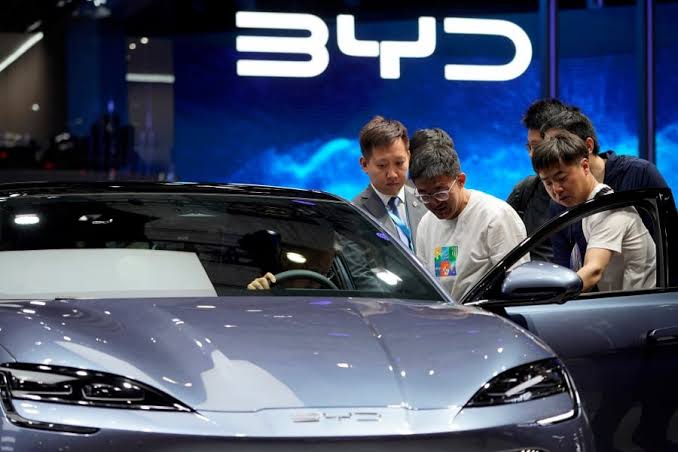

China’s auto market, the biggest in the world, is quickly transitioning to electric vehicles – leaving traditional global brands lagging behind.
China is the world’s largest automotive market and is quickly transitioning to electric vehicles. Many established global brands have been slower to transition, which has put them behind their competitors.
When auto executives convene in Shanghai for the auto show starting today, they will return to a sharply different market from the one they left in 2021 when the industry gathered for a limited event under strict COVID-19 controls.
The biggest change: China-made brands now lead in key segments and their rise has been powered by new electric-drive models that are gaining share at home and overseas.
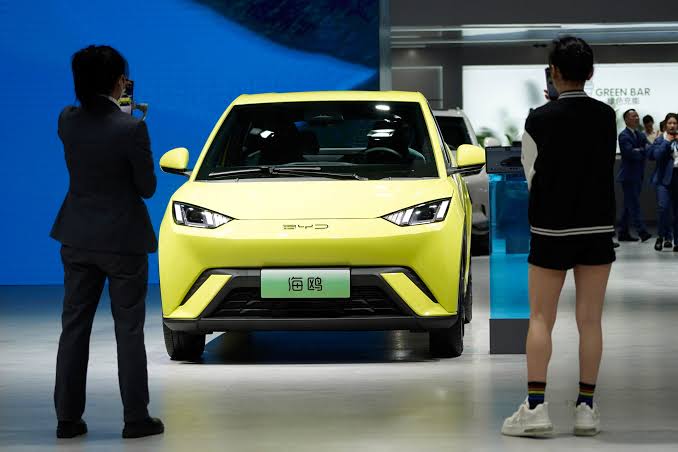
The biggest winner has been BYD, which will use the Shanghai show to unveil a new hatchback electric vehicle (EV) for value-seeking buyers and a pricier EV styled as an SUV.BYD’s sales in China are up almost 69 percent this year, giving it an 11 percent share of the overall car market, more than the Volkswagen brand or the Toyota brand, according to an analysis of sales data.
“The stratification of this market into clear winners and losers is becoming clear,” Bill Russo, founder of consultancy Automobility said in a note issued on Tuesday. “And there are very few winners and a whole lot of losers.”
But sales of EVs and plug-in hybrids – an area where Chinese automakers led by BYD now dominate – were up 22 percent. Sales of internal-combustion vehicles were down by an almost equal margin.
The result has been a double whammy for the likes of Volkswagen, General Motors, Honda and Nissan. Sales are down and so is market share.More than 40 auto brands have followed Tesla in cutting prices on EVs since January in a price war that has supported sales of EVs and plug-in hybrid electric vehicles (PHEVs), both of which are classed as “new-energy vehicles” in China.
The ‘final bastion’ for combustionFor years, China’s entry-level market for passenger cars was dominated by combustion-engine cars made by global automakers in partnership with Chinese brands.
But for cars priced between US$22,500 and US$30,000, this year has been a wipeout for gasoline-only vehicles. Sales were down 20.5 percent in the first quarter, compared with a 68 percent gain for EVs and plug-in hybrids.BYD’s Song plug-in hybrid SUV, with a starting price of about US$20,000, outsold the Nissan Sylphy, which had been China’s top-selling car for three straight years. BYD’s Dolphin EV, which starts at about US$17,000, was ahead of the Volkswagen Passat.
Because of the cost pressure on EVs from battery materials, the entry-level market is likely to be “the final bastion” for gasoline-only vehicles in China, Xu Haidong, deputy chief engineer at the China Association of Automobile Manufacturers, said.In China’s premium market, with prices between about US$52,500 and US$60,000, electric-drive cars are already the best sellers.
BYD dominates China’s market for plug-in hybrids, cars that have a combustion engine but are capable of being charged and running for shorter distances on electric power.Plug-ins represent more than half of BYD sales this year, giving the company scale to compete on price across its line-up, analysts say.
Tesla’s ‘heart and lungs’Tesla saw a 27 percent increase in Chinese sales in the first quarter to just over 137,000 of its Model 3 sedans and Model Y crossovers. Tesla also increased its share after cutting prices in China by between 6 percent and almost 14 percent in January.
That put starting prices for Teslas in China between US$7,500 and about US$10,700 lower than current US prices, which have also been discounted.