
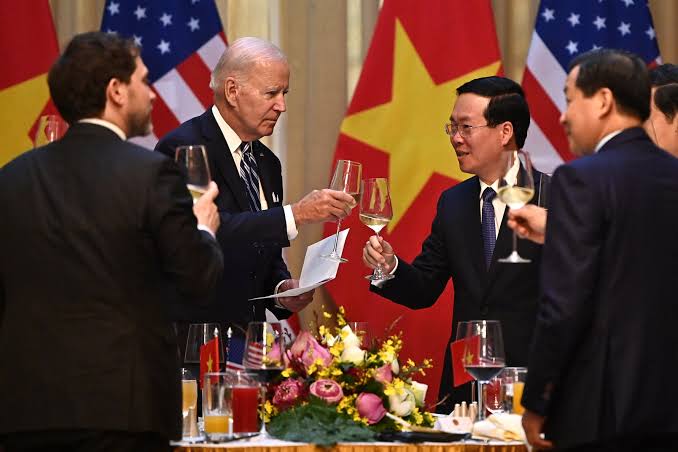

In a bid to bolster its position in the face of escalating global trade tensions, Vietnam is preparing to host a series of high-level talks with leaders from China and the European Union in the coming weeks. The talks come at a crucial juncture, as the country faces mounting uncertainty over the potential for tariffs to be imposed by the United States, which could significantly affect both Vietnam’s economy and its broader trade networks.
Sources familiar with the matter have suggested that these discussions will be focused on strengthening economic ties between the three regions, with particular emphasis on reducing trade barriers, enhancing cooperation on key industries, and exploring new opportunities for investment. With the US continuing to leverage tariffs and trade measures to assert its economic dominance, Vietnam has become a key focal point for global stakeholders seeking to mitigate the potential fallout.
Trade in the Crosshairs
The backdrop to these upcoming talks is one of heightened geopolitical and economic tension. The United States has long employed tariffs as part of its trade strategy, particularly targeting China, and more recently, other countries like Vietnam, which has increasingly become a central hub for manufacturing and exports in Southeast Asia.
For Vietnam, which has benefited greatly from its role in the global supply chain, particularly in electronics, textiles, and consumer goods, the looming threat of US tariffs poses a significant challenge. The US has raised concerns that Vietnam is becoming a hub for Chinese goods being rerouted to avoid tariffs, a practice that could trigger retaliatory measures against the country’s exports.
China and the EU as Key Allies
In this climate of uncertainty, both China and the European Union are strategic partners for Vietnam. China, its largest trading partner, remains a critical economic ally, particularly in sectors like infrastructure and manufacturing. China’s presence in the talks is also expected to offer insight into the broader implications of ongoing trade disputes between the US and China, and how Vietnam can play a role in balancing these tensions.
The European Union, which has been actively seeking to expand its trade footprint in Asia, is also expected to play a pivotal role in these discussions. Vietnam and the EU have already strengthened ties through the EU-Vietnam Free Trade Agreement (EVFTA), which took effect in 2020. This agreement has given Vietnam preferential access to European markets, and further collaboration between the two sides could offer a path forward for the Southeast Asian nation to counterbalance potential losses from the US tariff policies.
Global Supply Chains and Economic Stability
One of the central topics expected to dominate the discussions is the resilience of global supply chains, which have faced unprecedented disruptions in recent years due to the COVID-19 pandemic, natural disasters, and ongoing trade disputes. As a key player in global manufacturing and export networks, Vietnam is keen to ensure that it can continue to secure trade routes and maintain its position as a linchpin in regional supply chains.
The talks are also expected to focus on diversification—both in terms of markets and supply chain sources. With growing concerns over the vulnerability of relying too heavily on a single market, particularly the United States, Vietnam is likely to push for more diversified trade relations that allow it to mitigate risks from external economic shocks.
The Diplomatic Balancing Act
For Vietnam, hosting these key leaders is not just an opportunity to strengthen its economic ties with China and the EU; it is also a delicate diplomatic balancing act. While deepening relations with China remains essential, Vietnam must tread carefully to avoid becoming too closely aligned with Beijing in the eyes of the United States and other global powers.
Similarly, while it seeks to maintain a strong relationship with the European Union, Vietnam must ensure that its approach does not antagonize its American counterpart. This careful diplomacy will be vital as Vietnam looks to position itself as a central player in the evolving global trade order.
Looking Ahead
As the talks between Vietnam, China, and the European Union unfold, all eyes will be on how these discussions shape the future of regional trade dynamics. With the specter of US tariffs looming large, Vietnam’s ability to successfully navigate this complex web of international relations will be key to ensuring its economic stability and growth in the years to come. The outcome of these meetings could not only have far-reaching implications for Vietnam but could also signal shifts in global trade strategies as countries worldwide adjust to a rapidly changing economic landscape.
source: straitstimes.com