
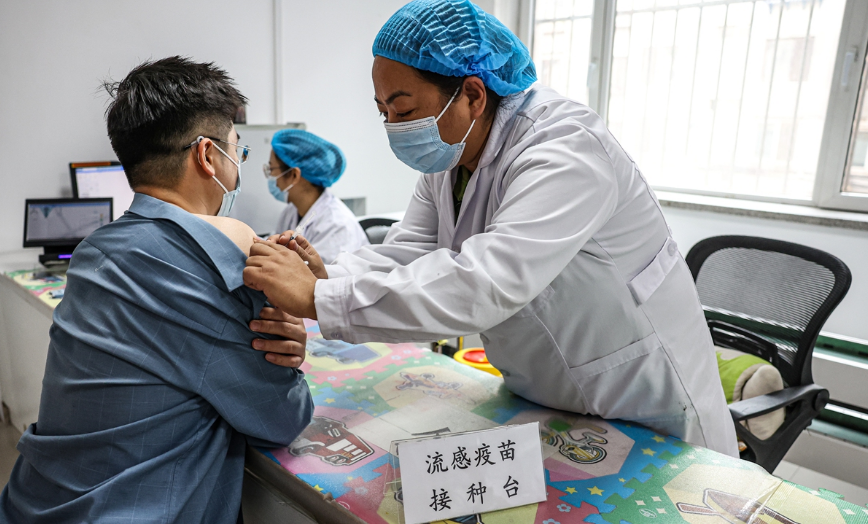

China’s National Health Commission (NHC) responded on Friday to the World Health Organization’s (WHO) apprehensions regarding an increase in respiratory illnesses and clusters of pneumonia in children. The NHC stated that the reported respiratory cases are attributed to known infectious agents.
During a press conference on Friday, the NHC revealed that it conducted an online video conference with the WHO to discuss respiratory infectious diseases. Experts from China’s National Administration of Disease Prevention and Control, Chinese Center for Disease Control and Prevention, and National Children’s Medical Center presented insights into the current epidemic trend, pathogen monitoring, clinical diagnosis and treatment, as well as health education in China.
The country has witnessed a surge in respiratory infectious diseases, including influenza, mycoplasma infection, and pneumonia.
In response to the situation, China’s State Council issued a notice on effectively preventing respiratory infectious diseases on Friday. The advisory warned of a potential overlap of several respiratory diseases, including COVID-19, flu, and mycoplasma, during the upcoming winter and spring seasons.
While stating that the overall situation of COVID-19 is stable, the State Council emphasized the risk of a winter rebound. It also highlighted the worsening conditions of influenza and mycoplasma pneumoniae infection since October 2023.
The State Council called for enhanced monitoring at key locations such as borders, schools, and nursing homes to effectively track major infectious diseases. It also stressed the importance of preparing medical resources. The NHC has guided medical institutions to implement hierarchical medical diagnosis mechanisms and enhance the capacity of primary-level healthcare institutions.
Local governments were urged to provide information about medical institutions offering pediatric diagnosis and treatment services to facilitate public access. Common respiratory diseases currently prevalent in China include mycoplasma infection, influenza, and adenovirus infection, with a recent decline in mycoplasma cases but a rise in other respiratory viral infections.