
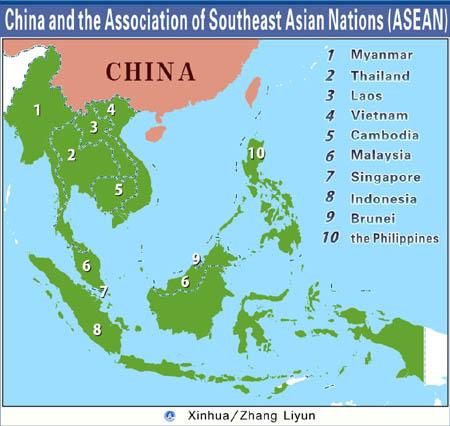

China and ten Southeast Asian countries, collectively known as the Association of Southeast Asian Nations (ASEAN), have signed a free trade agreement that is expected to boost trade and economic cooperation in the region.
The agreement, called the Regional Comprehensive Economic Partnership (RCEP), was signed at a virtual summit attended by leaders from all participating countries, including Chinese Premier Li Keqiang and Singaporean Prime Minister Lee Hsien Loong.
The RCEP is the world’s largest free trade agreement, covering a population of more than 2.2 billion people and accounting for around 30% of global GDP. It eliminates tariffs on a wide range of goods and services and establishes common rules for trade and investment in the region.
“The RCEP marks a major milestone in our efforts to promote economic integration and cooperation in the region,” said Premier Li Keqiang in a statement.
The agreement is seen as a significant step towards closer economic ties between China and the ASEAN countries, which have become increasingly important trading partners in recent years. China is the largest trading partner of ASEAN, while ASEAN is China’s third-largest trading partner.
“The RCEP will help to create new opportunities for businesses in the region and promote economic growth and prosperity,” said Prime Minister Lee Hsien Loong.
The agreement has been welcomed by business groups and economists, who say it will help to boost trade and investment in the region and promote economic development.
“The RCEP is a game-changer for the Asia-Pacific region,” said Dr. Deborah Elms, the executive director of the Asian Trade Centre. “It will help to create a more integrated and prosperous region, with more opportunities for businesses and workers.”
As China and the ASEAN countries continue to develop and grow, the RCEP is seen as a critical step towards creating a more interconnected and dynamic economic region in Asia.