
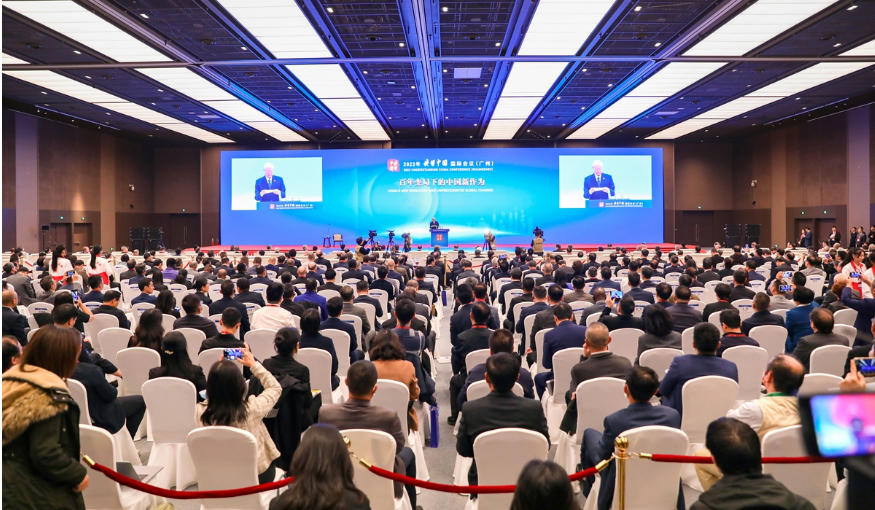

The 2023 Understanding China Conference (Guangzhou) concluded on Sunday, emerging as a pivotal platform to bridge the substantial “understanding deficit” between nations and civilizations. The conference, themed “China’s New Endeavors amid Unprecedented Global Changes,” attracted 70 international guests from over 30 countries and regions, marking the 10th anniversary of this significant event.
President Xi Jinping, in a congratulatory letter to the conference, emphasized the critical role of comprehending Chinese modernization in understanding China. He highlighted China’s commitment to building a great nation and promoting a shared future for humanity.
Key attendees underscored the conference’s importance in dispelling misconceptions, especially amid what they perceive as misleading narratives in Western media. Zheng Bijian, the founding chairman of the China Institute for Innovation and Development Strategy, emphasized the conference’s consistent dedication to three understandings: understanding China, understanding the world, and understanding the changes of the century.
Distinguished participants, including Martin Jacques from Cambridge University, emphasized the distinctive nature of Chinese modernization. They noted its stark contrast with Western modernization, emphasizing China’s constructive relationship with the developing world.
Xi’s letter conveyed China’s commitment to peaceful development, maintaining global peace, and contributing to shared global development. Observers noted that China’s modernization approach differs from the security-centered, military-dominated narrative presented by the US and Western countries.
Discussions during the conference also delved into China-US relations, particularly in the aftermath of the high-stakes meeting between the heads of state in San Francisco. Attendees expressed optimism about closed-door dialogues fostering mutual understanding and empathy, leading to concrete options for improving major power relationships.
Cui Tiankai, former Chinese ambassador to the US, highlighted the importance of addressing misrepresentations about China’s strategic intentions,
multilateral diplomatic policies, the Taiwan question, and diplomatic styles. Some experts acknowledged the recent San Francisco meeting as a positive step, though they cautioned that a substantial improvement in China-US relations requires more efforts.
Despite the challenges, there was consensus among attendees that addressing the understanding deficit is crucial. Some suggested that China should focus on engaging with ordinary Americans, emphasizing the importance of human-level communication and storytelling to dispel misconceptions.
In reflecting on the conference’s 10-year journey, it is evident that it has evolved into a significant platform for fostering global understanding, particularly regarding China’s development strategies. As the world grapples with diverse narratives, the Understanding China Conference remains committed to its principles of promoting understanding on a global scale.