
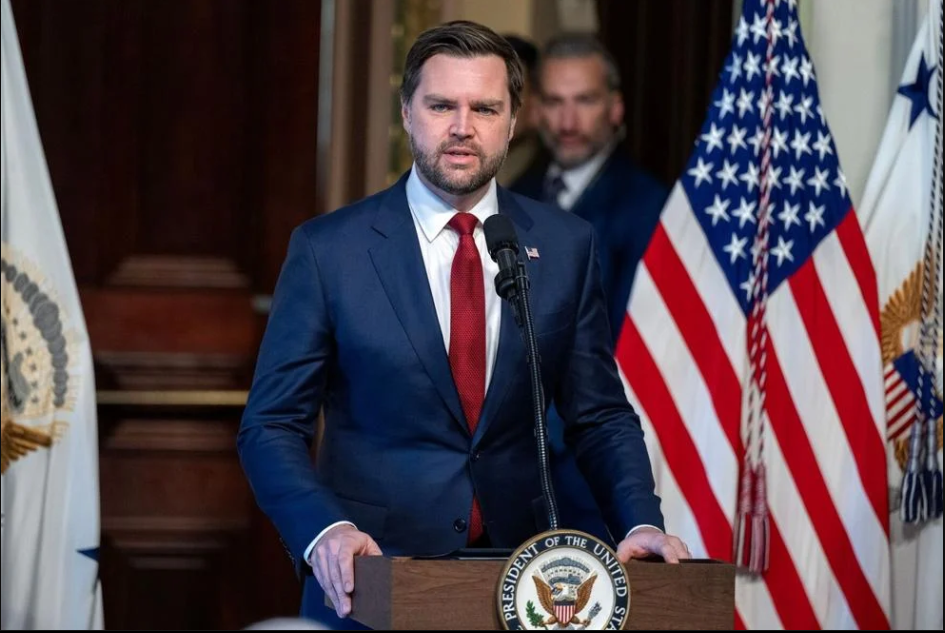

In a fiery response to recent remarks made by U.S. Senator JD Vance, the Chinese government has condemned the Ohio Republican for referring to Chinese citizens as “peasants” during a public speech. The comments, made at a conservative rally earlier this week, have sparked a diplomatic row, with Chinese officials accusing Vance of perpetuating harmful stereotypes and disrespecting millions of hardworking Chinese citizens.
Vance’s controversial statement was made while discussing U.S.-China relations, with the senator expressing his frustration over what he described as the “influence of Chinese peasants” in global affairs. He went on to argue that Beijing’s growing power was propelled by a large, undereducated labor force. The remarks quickly spread across social media, attracting outrage from both Chinese nationals and international observers.
The Chinese Ministry of Foreign Affairs issued a sharp statement on Friday, denouncing Vance’s “ignorant and offensive” remarks. “The comments made by JD Vance are a blatant example of racial prejudice and an insult to the Chinese people,” a spokesperson said. “His words are not only a reflection of ignorance but also a disturbing attempt to degrade and stereotype a proud nation that has made significant progress in the 21st century.”
This isn’t the first time Vance has attracted controversy for his comments on China. Known for his hardline stance on the Chinese government and his criticism of American elites, Vance has increasingly been vocal about the perceived threat posed by China to U.S. interests. However, critics argue that his rhetoric often veers into xenophobic territory, further straining an already tense relationship between the two countries.
The diplomatic fallout from Vance’s words could have implications for U.S.-China relations, which have been at a low ebb over trade disputes, technology competition, and geopolitical tensions in the South China Sea. While Vance’s remarks were directed at China’s leadership, many see them as an attack on Chinese citizens as a whole, leading to calls for an official apology from the senator.
Political analysts suggest that Vance’s comments may be part of his broader strategy to appeal to his political base by adopting an aggressively anti-China stance. However, they warn that such incendiary language risks undermining the potential for meaningful dialogue between the world’s two largest economies.
As the controversy continues to unfold, the Chinese government has yet to call for direct diplomatic action against the U.S. but has urged the American leadership to address the matter swiftly, calling for greater respect in international discourse.
For now, the world watches as this latest episode in the U.S.-China rivalry plays out on the global stage.
source: rnz.co.nz