
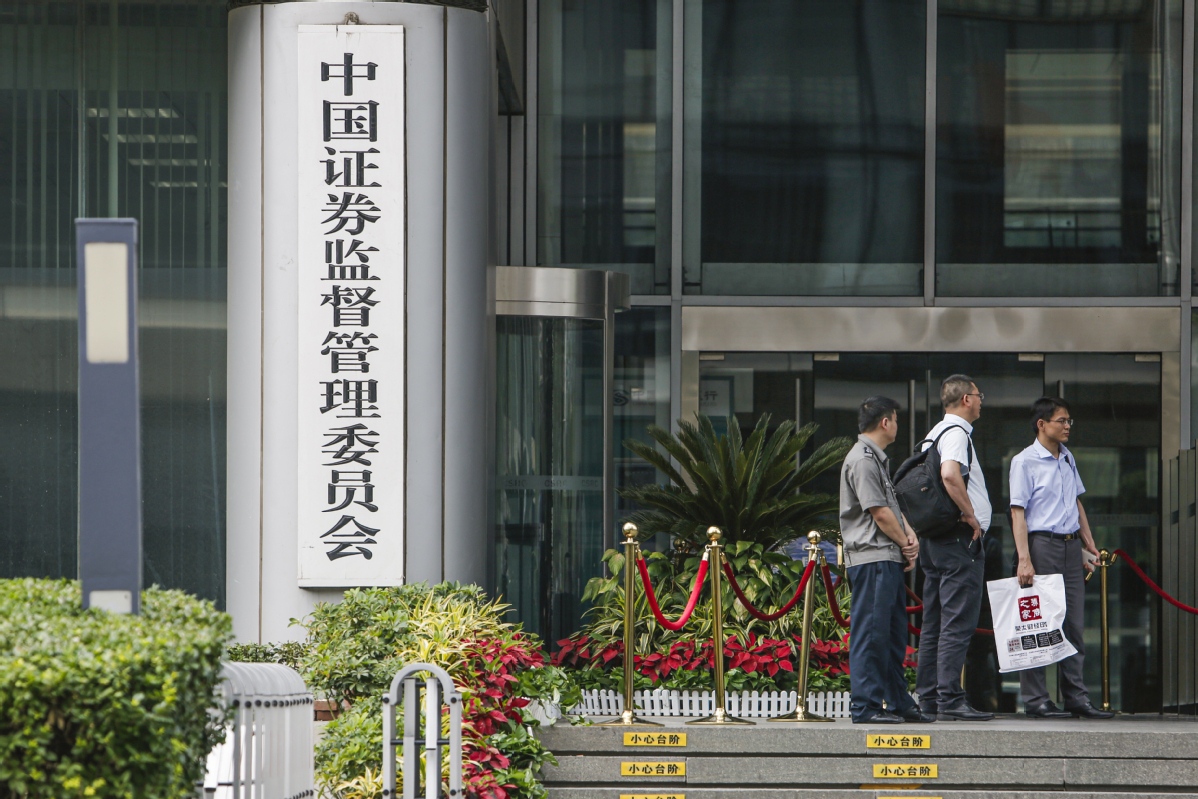

China is accelerating its capital market opening-up efforts with a renewed focus on deepening connectivity programs between the Chinese mainland and Hong Kong. The goal is to inject greater vitality into the markets and support the country’s high-quality economic growth, according to officials and industry experts.
New Round of Reforms for Deeper Integration
During a forum held in Hong Kong to celebrate the 10th anniversary of the stock connect programs, officials from the China Securities Regulatory Commission (CSRC) discussed plans for more comprehensive and rapid reforms to enhance the integration of Chinese financial markets with global markets. Wu Qing, Chairman of the CSRC, emphasized the country’s commitment to market-driven reforms and international best practices, stating that pragmatic measures will be introduced to facilitate cross-border investments and financing.
Wu also highlighted that the CSRC is dedicated to creating a market-friendly environment based on the rule of law, which will help international investors deepen their engagement with China’s capital markets.
Optimizing the Stock Connect Mechanisms
The forum also featured remarks from Li Ming, CSRC Vice-Chairman, who confirmed plans to optimize and expand the stock connect mechanisms linking the Shanghai, Shenzhen, and Hong Kong stock exchanges. These programs, which allow foreign investors to trade A-shares and vice versa, have significantly boosted market liquidity and trading volumes over the past decade.
The Stock Connect programs, which connect the mainland Chinese bourses with the Hong Kong exchange, have successfully attracted international investors, particularly after A-shares were included in well-established global indices such as the MSCI. This inclusion has brought in more long-term foreign capital, which is expected to continue flowing into the Chinese market.
Record Foreign Investment in Chinese Stocks
As of September 2024, foreign institutions and individuals held a total of 3.13 trillion yuan (approximately $430 billion) worth of Chinese onshore stocks, marking the first time this figure has surpassed the 3 trillion yuan mark. This represents a significant milestone in the internationalization of China’s capital markets.
At the same time, Bonnie Y Chan, CEO of Hong Kong Exchanges and Clearing Ltd., noted that 77% of foreign investors participating in the stock connect programs have accessed A-shares via the southbound and northbound channels. In October 2024, the total trading value for these connect mechanisms reached record highs, with HK$280 billion ($36 billion) in southbound trades and 510 billion yuan in northbound trades.
Hong Kong as a Hub for IPOs and Investments
The ongoing connectivity between the Chinese mainland and Hong Kong has also made the Hong Kong Stock Exchange a key destination for Chinese mainland companies to list their shares. In 2024, a total of 40 Chinese mainland companies went public on the Hong Kong bourse, surpassing the 34 IPOs recorded during the same period in 2023.
Li Ming added that the connectivity mechanism has significantly boosted Hong Kong’s attractiveness as a listing venue, drawing more capital, institutions, talent, and information into the city. This trend further solidifies Hong Kong’s role as a central hub for cross-border capital flows.
Expanding Cross-Border Investment Opportunities
Looking ahead, the CSRC aims to support the launch of more cross-border exchange-traded funds (ETFs) and to expand the stock connect programs to include depository receipts and enhance mutual recognition of funds between the mainland and Hong Kong markets.
Moreover, Li emphasized efforts to encourage foreign institutions to make industry-related investments in China, while also promoting outbound investments by domestic institutions. As part of this strategy, the CSRC will further refine the regulatory framework for overseas listings and support the development of technological innovation and other quality productive forces.
Future Prospects for the Chinese Capital Market
The integration of China’s capital market with global financial markets is expected to continue evolving, with further expansion in terms of product categories, market participants, and derivatives trading. The green finance sector, which focuses on sustainable investments, is also seen as a key area for development, with ongoing efforts to establish green bonds and other financial instruments.
Tan Yueheng, Chairman of BOCOM International Holdings, noted that China’s capital markets will continue to open in an orderly manner, with a growing emphasis on international collaboration. He pointed out that expanding the connectivity mechanisms will enhance China’s standing as a global financial center and foster the growth of its financial services industry.
China’s ongoing reforms and market opening initiatives are positioning the country as a leading player in the global financial system. With a focus on expanding connectivity between mainland China and Hong Kong, China aims to further integrate its markets, attract foreign investments, and drive long-term economic growth. The continued evolution of the Stock Connect programs, along with the introduction of new financial products and regulatory frameworks, will likely sustain the momentum of China’s capital market development and its growing influence on the world stage.