
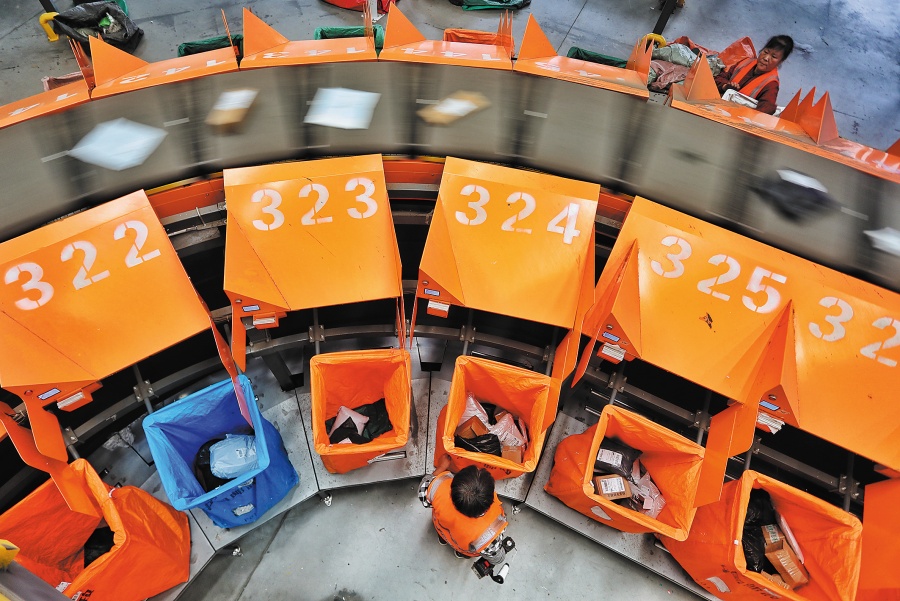

China’s parcel delivery sector has reached a monumental milestone in 2024, handling a record 150 billion parcels as of Sunday afternoon. This significant achievement underscores the country’s economic strength and the growing efficiency of its logistics and e-commerce infrastructure.
The Milestone and Its Symbolism
The 150 billionth parcel, a box of apples from Tianshui in Gansu Province to Chongqing, serves as a powerful symbol of China’s vast and efficient logistics network. This parcel traveled nearly 800 kilometers and represents the scale of the country’s parcel delivery system, which now covers an impressive geographic expanse from the rural heartlands to major urban centers.
This milestone was officially recognized by the State Post Bureau at 4:29 pm via the China Express Delivery Big Data Platform, a real-time tracker of delivery statistics, marking a defining moment for the sector.
A Decade of Remarkable Growth
The milestone also highlights the extraordinary growth trajectory of China’s parcel delivery industry. Just a decade ago, in 2014, the sector managed 14 billion parcels. Fast forward to 2024, and the number has surged by over 1,000% to reach 150 billion, reflecting not only the growth of the logistics infrastructure but also the burgeoning e-commerce market driving this demand.
This surge in parcel delivery volumes is directly linked to the rapid expansion of China’s digital economy and its e-commerce giants such as Alibaba and JD.com, which have revolutionized consumer behavior and created massive logistical demands.
Impact on Economic Activity
The expansion of the parcel delivery network is not merely a logistical feat but a reflection of the underlying economic activity in China. As noted by Zhao Guojun, director of the Beijing University of Posts and Telecommunications’ Postal Development Research Center, the parcel delivery sector is vital in driving both production and consumption.
- Production: The industry fuels economic activity by ensuring that goods, from electronics to everyday necessities, are efficiently delivered across the country, stimulating production in manufacturing hubs.
- Consumption: It supports a growing consumer market, allowing residents in urban and rural areas alike to access products quickly and affordably. The sector’s ongoing improvements in quality and efficiency continue to power China’s economic momentum.
The scale of China’s parcel delivery operations reflects the vibrancy of its economy and its ability to meet rising demand for speed and reliability in delivery services.
Record-Breaking Daily and Monthly Shipments
The achievement of 150 billion parcels is just one part of the broader picture of the sector’s performance. On peak days this year, the industry has processed more than 729 million parcels, a stunning volume that showcases the logistical prowess required to meet the demands of such a large population and expansive geography.
- Monthly Shipment Volumes: The sector consistently handles over 13 billion parcels per month.
- Revenue: Business revenues in the sector have surpassed 100 billion yuan (around $13.81 billion) each month, reinforcing the sector’s importance to the overall economy.
The achievement of 150 billion parcels is more than just a numerical milestone—it is a testament to the rapid growth and increasing sophistication of China’s logistics infrastructure. As the country’s e-commerce market continues to thrive, the parcel delivery sector plays a pivotal role in driving economic activity, improving consumer welfare, and stimulating industrial growth.
With these remarkable figures, China’s parcel delivery network stands as a global leader in logistics, setting a high benchmark for efficiency, scale, and technological innovation in the sector. The industry’s ongoing evolution will continue to shape the future of e-commerce and logistics worldwide.