
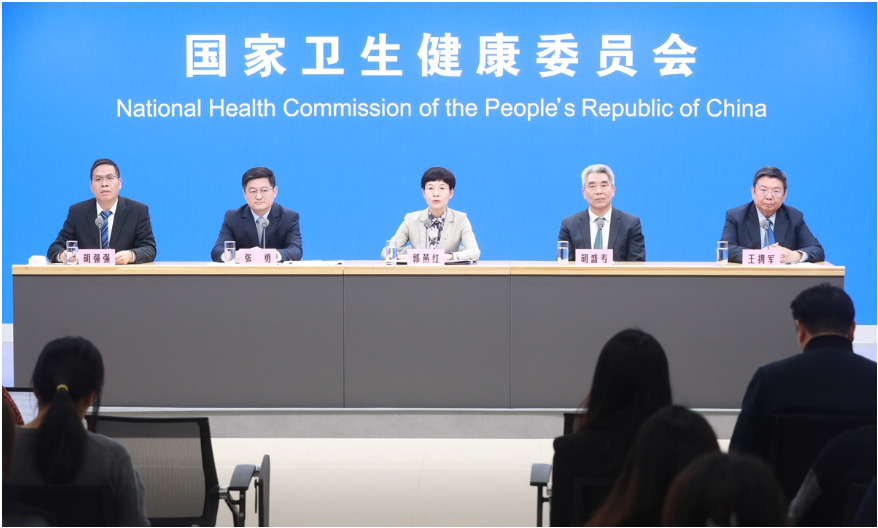

Thirteen government departments, led by the National Health Commission (NHC), have collaboratively devised a comprehensive action plan for cancer prevention and control spanning the years 2023 to 2030. The primary objectives of the initiative are to enhance the cancer care system and elevate the overall 5-year cancer survival rate to 46.6 percent by 2030, aligning with the broader strategy of fostering a healthier China.
Recent years have witnessed a consistent improvement in the five-year survival rate among cancer patients in China. Notably, individuals in advanced cancer stages now have the capability to live with tumors for extended periods while enjoying an enhanced quality of life. The five-year survival rate for breast cancer has achieved an impressive 83 percent in China, reaching the diagnostic and treatment standards of developed nations. Additionally, the five-year survival rate for esophageal cancer surpasses that in certain Western countries.
The overall trajectory of cancer incidence and mortality rates in China has been curtailed, with declining figures for prevalent cancers like esophageal, gastric, and liver cancer. From 2015 to 2022, China’s overall five-year cancer survival rate rose from 40.5 percent to 43.7 percent, meeting the phased objectives of the healthy China action as scheduled.
China has made substantial strides in cancer prevention and treatment technologies, with some approaches attaining or approaching international advanced levels. Notably, domestically produced HPV bivalent vaccines have been successfully administered. However, there remains a need for continued efforts to accelerate the development of cancer prevention and control technology, narrowing the gap with developed countries and attaining an internationally advanced status.
Responding to concerns about rising cancer incidence among the younger demographic, it was emphasized that such trends vary significantly based on the cancer type and age distribution. Prostate cancer typically manifests in men after the age of 60, while breast cancer in women sees a gradual increase starting around the age of 30, with the peak incidence occurring between 40 and 50.
The action plan outlines specific measures, including the promotion of occupational cancer prevention, sharing of pertinent information resources, early diagnosis and treatment initiatives, augmenting cancer care through traditional Chinese medicine, and intensifying the promotion and application of cancer research achievements.