
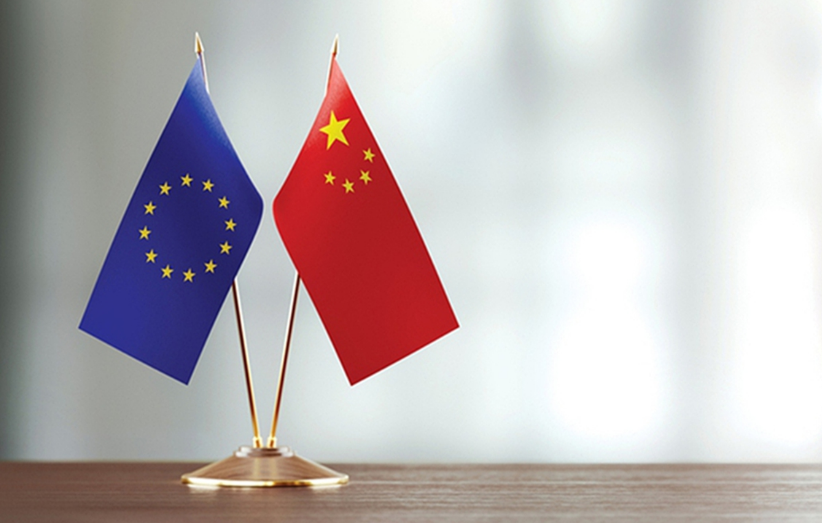

Chinese analysts emphasized on Thursday that China-EU relations should steer clear of ideological and geopolitical influences. Following the China-EU Summit, held in Beijing on December 7, analysts urged the European Union to capitalize on the positive momentum generated by the summit for fostering bilateral cooperation. They cautioned against yielding to hardliners promoting divergences. This advice comes after the European Parliament adopted a report and resolution that meddled in China’s internal affairs, highlighting issues like trade imbalance, human rights, and the Taiwan question.
The European Parliament, often labeled as the “anti-China” base, passed a report characterizing China as both a partner and an increasing competitor and systemic rival to the European Union. It called for a review of the EU’s strategic approach to China and urged pragmatic engagement on global challenges while addressing human rights concerns in Xinjiang, Xizang, Hong Kong, and Macao.
China vehemently opposed the report and resolution, stating that they infringed upon its sovereignty, interfered in internal affairs, and violated international norms and the EU’s political commitments. The Chinese Mission to the EU emphasized that ideology and geopolitics should not hijack China-EU relations, warning that conflict is detrimental to both sides and the global community.
While the 24th China-EU Summit provided opportunities for collaboration and addressing differences, the European Parliament’s report showcased mixed and complex perceptions of China within the EU. Analysts noted that ideological biases might impact the stability of China-EU ties.
The European Parliament, known for its tough stance on China, revealed a focus on China as a competitor and rival, overlooking its role as a partner, according to Sun Keqin, a research fellow at the China Institutes of Contemporary International Relations. Despite valuing cooperation, China disagreed with the EU’s characterization of it as a systemic rival.
EU foreign policy chief Josep Borrell used the example of football rivals Real Madrid and Barcelona to explain rivalry, stating that rivals have different goals and each seeks victory. However, some MEPs claimed China was shifting relations toward systemic rivalry.
The Chinese Mission to the EU argued that labeling China and the EU as systemic rivals exaggerated ideological differences, hindering relations. Analysts highlighted the effective use of the systemic rivalry narrative, along with emphasizing human rights and the Taiwan question, by anti-China MEPs to damage bilateral ties.
The European Parliament also adopted a resolution urging the European Commission to strengthen cooperation with Taiwan, a move seen as damaging to China-EU relations and opposed by China. Analysts criticized the EU’s actions as contradictory to the positive trend in China-EU economic and trade relations.
The report discussed economic ties with China, stressing the importance of balanced trade relations and de-risking with China. On the trade imbalance issue, China maintained that it does not deliberately pursue a surplus, and current trade status results from industrial and trade structures. Analysts urged bilateral consultation for a win-win solution.
Chinese experts emphasized that China and the EU share extensive common interests, including maintaining a stable international order and addressing global challenges like climate change. They urged the EU to maintain strategic independence, adopt a pragmatic approach, and listen to more objective and rational voices within its ranks. The Chinese Mission to the EU urged the European Parliament to prioritize voices promoting dialogue, partnership, and mutual understanding, rather than succumbing to ideological biases and false information.