
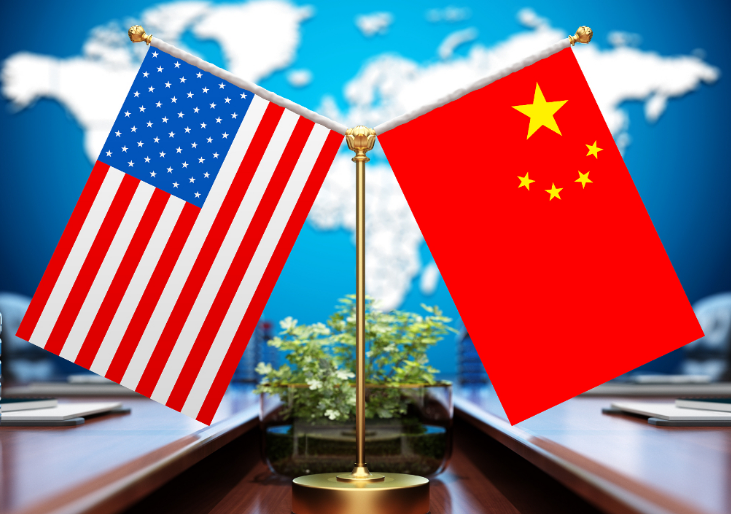

China and the United States are intensifying their engagement through frequent meetings and visits by officials and business leaders, signaling a commitment to stabilizing ties. Trade chiefs from both nations recently met during the WTO Ministerial Conference in Abu Dhabi, with further interactions expected. Despite positive engagements, underlying tensions persist, particularly in economic, technological, and military domains, as the US emphasizes competition with China. Analysts view the increased dialogue as a positive signal for stabilizing relations but stress the importance of concrete actions to match pledges of non-containment and a shift away from Cold War mentalities.
Positive Developments:
Increased Flights: The US Transportation Department announced that Chinese airlines will be permitted to increase weekly round-trip flights to the US from 35 to 50 starting March 31. While still lower than pre-2020 levels, the move is seen as a positive step in bilateral exchanges, facilitating business and cultural interactions.
Trade and Economic Meetings: The head of a prominent US business group is leading a delegation to Beijing, underscoring continued economic ties. Trade chiefs, including Chinese Vice Commerce Minister Wang Shouwen, met with the US Chamber of Commerce delegation in Beijing. Positive signals were also noted from meetings between Chinese Commerce Minister Wang Wentao and US Trade Representative Katherine Tai at the WTO Ministerial Conference.
Growing Economic Cooperation: Chinese and US officials have engaged in multiple rounds of talks, focusing on economic and trade issues. These exchanges aim to ensure mutual assurance of win-win cooperation, stabilize supply chains, and enhance commercial trust, contributing to a positive trend.
Analysts’ Perspectives:
Mutually Beneficial Relationship: Despite competitive dynamics, the mutually beneficial nature of the China-US economic and trade relationship serves as a reliable stabilizer. Increased Chinese exports contribute to lowering US inflation, while growing economic interactions stabilize the US economy, reinforcing the trend of economic and trade cooperation.
Remaining Risks: Analysts caution that risks persist due to the US emphasis on competition and containment. Recent moves, including the release of a report on China’s WTO compliance and continued scrutiny of Chinese businesses, reflect the US approach. The US focus on competition and statements like “we don’t want to live in a world where the Chinese are the dominant country” heightens concerns.
Continued Crackdown: The US has maintained pressure on Chinese businesses based on claims such as national security threats and forced labor. The expansion of scrutiny on solar firms linked to Chinese forced labor drew a sharp response from China, emphasizing the need for the US to cease smearing, meddling in internal affairs, and politicizing economic and trade issues.
In Summary:
While positive signals are evident in the increasing engagement between China and the US, underlying tensions pose challenges to the bilateral relationship. Analysts emphasize the need for the US to translate its commitment to non-containment and cooperation into concrete actions, fostering a stable and cooperative environment. Ongoing dialogues aim to address mutual concerns, but sustained efforts are required to navigate the complexities of this consequential relationship.