
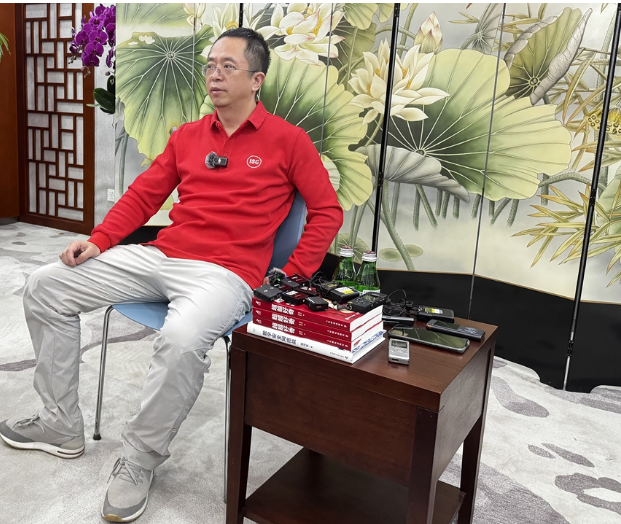

Zhou Hongyi, founder and chairman of 360 Security Technology and a member of the National Committee of the Chinese People’s Political Consultative Conference, predicts that 2024 could be the “year of application” for China in the field of artificial intelligence (AI). Despite acknowledging a gap in determining the technical direction between China and the US, Zhou believes China’s rapid learning capabilities will bridge this gap within one or two years.
Zhou emphasizes the importance of recognizing the gap to facilitate effective catch-up efforts. While he acknowledges the challenge of creating a universal large model surpassing GPT-4, Zhou is optimistic about China surpassing GPT-4 in specific vertical fields. He cites the transformative impact of large models in various industries and their potential to trigger an industrial revolution.
Discussing OpenAI’s recent release, Sora, a text-to-video AI generator, Zhou acknowledges some undisclosed capabilities, suggesting a gap between China and the US. He underscores the main gap in AI lying in determining the original technical direction, particularly the architecture choice, where transformers are pivotal.
Zhou draws parallels with historical examples, such as the development of electric cars in Japan, to illustrate the importance of the right technical direction. He believes that once the direction is determined, China’s fast learning capabilities can bridge the gap, especially when peers release open-source projects or publish papers publicly.
Regarding the future application of Sora, Zhou notes that its significance goes beyond generating videos, emphasizing the need for the AI to understand interactive relationships in the real world. He sees Sora as a step closer to Artificial General Intelligence (AGI), capable of interacting with the world based on learned common sense.
Addressing concerns about content security and regulation in large model development, Zhou acknowledges global challenges in ensuring trustworthiness, controllability, and reliability. He sees reasonable regulation as essential for preventing AI tools from being misused and believes it can positively impact AI development rather than hinder progress.