
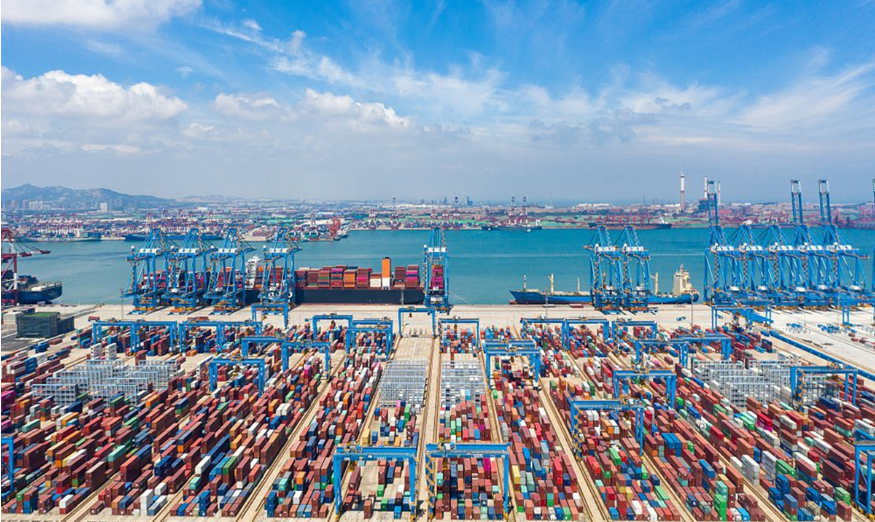

Amid reports of slowing investment and external narratives of economic instability, China remains committed to effective investment in key emerging sectors to ensure long-term, sustainable growth.
Beijing, China: As Western officials and media outlets increasingly depict China’s economy as being on the verge of collapse, claims of slowing investment, one of China’s three economic growth drivers, have become prevalent in media reports. However, such claims often concentrate on select indicators while overlooking China’s strategic emphasis on effective investment in emerging sectors to underpin lasting, sustainable growth.
While investor sentiment has weakened, posing challenges, China has implemented a range of measures to address these issues and stabilize both foreign and private sector investment. In a recent move aimed at bolstering investor confidence, the People’s Bank of China (PBOC) announced a 25-basis point cut in the reserve requirement ratio, effective immediately, to ensure ample liquidity and support economic recovery.
Robust Investment Activity:
Despite reports of China’s fixed-asset investment growth slowing and private sector investment declining, two factors frequently highlighted in foreign media to criticize the Chinese economy, investment activities in key areas across the country remain vigorous.
The recently concluded China International Fair for Investment and Trade (CIFIT) in Xiamen, where businesses from around the world, including the US, the UK, and Thailand, showcased their products and services, witnessed enthusiastic participation. Over 1,000 business groups and nearly 80,000 exhibitors from 106 countries and regions attended, resulting in deals for 638 projects with a planned investment of 484.57 billion yuan ($66.58 billion).
Additionally, Xiamen held a ceremony for the groundbreaking or completion of 40 major projects valued at a combined investment of 71.4 billion yuan, spanning key sectors like new energy and information technology.
These bustling scenes are common in cities across China, underscoring that while China’s fixed-asset investment and private sector investment growth rates have moderated, investment remains vibrant.
Chinese officials and analysts dispute what they consider “inaccurate” narratives and maintain that investment in China remains robust. The focus on effective spending in emerging sectors such as technological innovation, green development, and new infrastructure is expected to sustain growth.
Foreign Investment in China:
Claims of declining Western investment in China contradict the actions of Western businesses operating in the Chinese market. German specialty chemical maker Evonik recently completed the relocation and expansion of its precious metal powder catalyst plant in Shanghai, doubling production capacity. UK-based IHG Group has opened 658 hotels under 12 brands in China, with nearly 500 more in the pipeline.
Official data from the Ministry of Commerce (MOFCOM) shows that while China’s utilization of foreign capital dropped 2.7% year-on-year in the first half of 2023, Western investment in China recorded rapid growth, led by a 173.3% increase in investment from France. Foreign investment in China’s high-tech sector grew by 7.9%, while high-tech manufacturing saw a 28.8% increase.
Focus on Effective Investment:
China’s focus on effective investment in new growth drivers aligns with the nation’s goal of ensuring long-term, sustainable economic growth. This approach diverges from the massive infrastructure spending undertaken after the 2008 global financial crisis, which, while stabilizing the economy, led to issues like overcapacity.
China prioritizes targeted investments that meet market demands, such as smart manufacturing and digital transformation. These investments drive the transformation and upgrading of the entire economy and society, building a modern industrial system.
The concentration of foreign investment in high-tech sectors aligns with China’s strategy to boost key emerging industries, ensuring sustainable economic growth. Recent data shows that investment in new infrastructure grew by 16.2% in H1 2023, while major energy projects saw a 23.9% increase. Investment in e-commerce and services expanded by 14.2% and 22.2%, respectively, outperforming fixed-asset investment’s 3.4% growth and a 0.5% decline in private sector investment in the first seven months.
Chinese officials have acted swiftly to stabilize foreign and private sector investment, including issuing measures to boost foreign investment in August and guidelines to foster private economy growth in July. These efforts are part of a broader strategy to stabilize overall economic growth amid global challenges.
China’s Market Remains Attractive:
The Ministry of Commerce emphasizes that despite foreign narratives, the Chinese market remains highly attractive to foreign investment. Growing attention to China’s market potential and confidence in government policies have contributed to stable growth trends in both private and foreign investment.
China’s commitment to effective investment in key emerging sectors, its openness to foreign investment, and its focus on sustainable, high-quality growth underscore the nation’s resilience in the face of evolving economic challenges.