

The upcoming Group of 77 plus China (G77+China) Summit in Havana aims to tackle core development challenges facing Global South countries and emphasize unity in facing major challenges. Diplomats and experts anticipate a final declaration that underscores the bloc’s principles and the needs of developing nations.
Havana, Cuba: The forthcoming Group of 77 plus China (G77+China) Summit in Havana is poised to address fundamental development issues confronting Global South nations while emphasizing unity in tackling major challenges. Diplomats and experts anticipate that the summit’s final declaration will underscore the bloc’s principles and the imperative to support developing countries.
Li Xi, a member of the Standing Committee of the Political Bureau of the Communist Party of China (CPC) Central Committee, will represent Chinese President Xi Jinping at the summit, as confirmed by the Chinese Foreign Ministry.
China expresses its eagerness for the summit to contribute positively to greater solidarity, enhanced cooperation, and collective responses to challenges among developing nations. Mao Ning, spokesperson of the Chinese Foreign Ministry, expressed this sentiment during a press conference, stating that China is prepared to collaborate with Cuba and other G77 member states to safeguard the shared rights and interests of developing countries.
Established in 1964, the G77 now boasts over 130 members, with chairmanship rotating among member countries from Asia, Africa, and Latin America based on regional principles. Cuba currently holds the chairmanship, and the summit is expected to bring together delegations from over 100 countries, including approximately 30 heads of state or government.
China, while not a G77 member, consistently supports its positions and legitimate demands, maintaining a positive cooperative relationship under the “G77 and China” framework.
This year’s summit, themed “current development challenges: the role of science, technology, and innovation,” is set to address pivotal development issues. Cuban Foreign Affairs Minister Bruno Rodriguez highlighted the summit’s focus on core development issues.
The summit will draw over 30 heads of state and government, including prominent figures such as Brazilian President Luiz Inacio Lula da Silva, Argentine President Alberto Fernandez, Colombian President Gustavo Petro, South African President Cyril Ramaphosa, and Antonio Guterres, the Secretary-General of the UN.
Miguel Díaz-Canel, the President of Cuba, emphasized the conference’s commitment to multilateralism, cooperation, and development, underlining its significance in the current international landscape.
One of the main challenges facing Global South countries is the quest for increased development opportunities amid escalating geopolitical tensions. Song Wei, a professor at the School of International Relations and Diplomacy at Beijing Foreign Studies University, underscored the challenges faced by countries like Cuba, which do not align with the political stance or standards of the US. Such countries are unfairly subjected to sanctions, impeding their development.
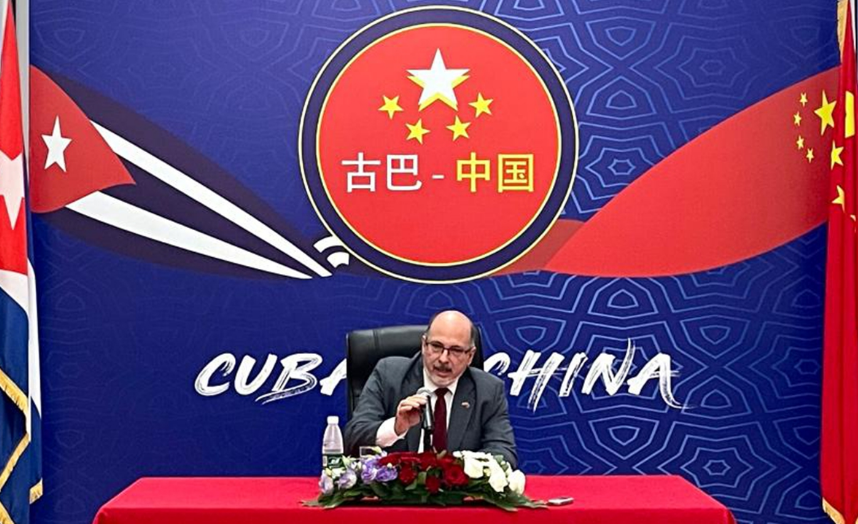
The G77 is hailed as the “most extensive and diverse” multilateral coordination organization, representing collectively 80% of the world’s population and over two-thirds of UN member states, as noted by Cuban Ambassador to China Alberto J. Blanco Silva. The G77 and China seek to create a more just, inclusive world and advocate international solidarity, cooperation, and sustainable development.
The summit’s theme concerning the role of science, technology, and innovation aligns with the belief that scientific and technological progress is integral to achieving sustainable development. However, the current international economic order disproportionately benefits a few countries, exacerbating socio-economic and technological disparities and brain drain from developing nations.
Jiang Shixue, a professor at the Center for Latin American Studies at Shanghai University, anticipates that this year’s summit will draw a more extensive range of attendees, including countries from the Non-Aligned Movement and BRICS, amplifying the voices of developing nations.
Raising the profile of the Global South reflects their dissatisfaction with current global and economic governance. Developing countries are increasingly focused on their own development needs. China, as a major global economy and a proponent of sustainable development through technological innovation, plays a proactive role in advancing the development agenda of Global South nations, according to the Cuban ambassador.