
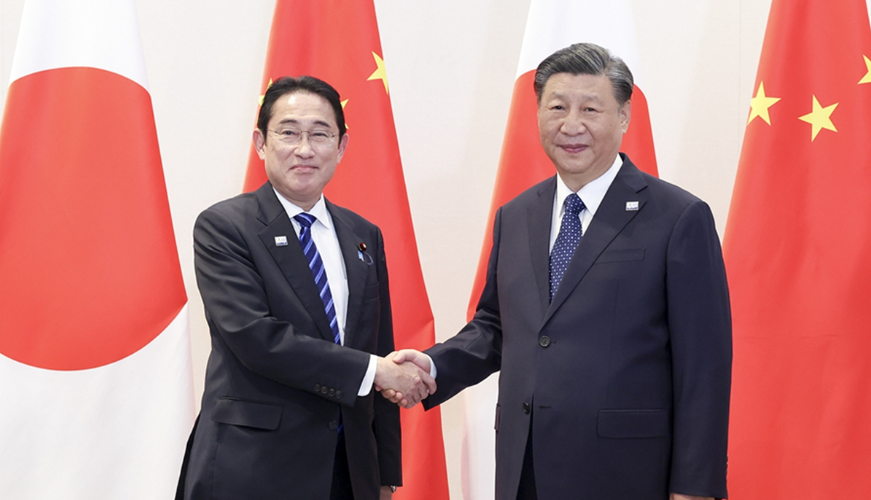

During the APEC meetings in San Francisco, Chinese President Xi Jinping and Japanese Prime Minister Fumio Kishida convened to discuss and reaffirm their commitment to advancing strategic and mutually beneficial relations between China and Japan. The leaders underscored the importance of preserving the foundation of bilateral relations, particularly on key principles related to history and Taiwan.
Xi stressed the need for both nations to prioritize common interests, manage differences appropriately, and adhere to the principles outlined in the four political documents between China and Japan. Analysts noted that in recent years, Japan’s policy toward China has shown signs of losing strategic autonomy, aligning more closely with the U.S. This trend has resulted in accumulating structural issues between the two nations.
Amid the complex international landscape and emerging challenges, Xi highlighted the significance of peaceful coexistence, enduring friendship, mutually beneficial cooperation, and common development for the fundamental interests of both Chinese and Japanese peoples. The meeting marked the first high-level dialogue between the leaders since their last encounter approximately a year ago in Bangkok.
Japanese media, such as Yomiuri Shimbun, reported on differences between the countries on security and the ban on Japanese seafood products. However, both leaders aimed to reaffirm a strategic and mutually beneficial relationship, emphasizing continued dialogue and cooperation, especially in areas such as the economy and climate change.
Experts observed that reiterating the commitment to a strategic and mutually beneficial relationship serves as a call for Japan to approach China-Japan relations strategically and from a long-term perspective. It urges Japan to maintain a balanced diplomatic policy between China and the U.S., addressing isolated contentious issues while not losing sight of the bigger picture.
The meeting also emphasized adherence to the principles outlined in the four political documents between China and Japan, focusing on major sensitive issues like history and the Taiwan question. Experts noted a decline in China-Japan relations due to Japan’s actions violating these core principles.
Xi emphasized the deep intertwining of economic interests, industrial chains, and supply chains between China and Japan, discouraging actions that promote “decoupling” and emphasizing the importance of cooperation. The leaders acknowledged the interdependence of their nations, encouraging a constructive attitude in addressing issues through consultations and negotiations.
Regarding Japan’s policy alignment with the U.S., experts noted that Japan’s strategic approach toward China may closely follow the pace of U.S.-China relations. While Japan seeks to strengthen communication and dialogue with China, the ongoing accumulation of issues may lead to a prolonged “cooling” state in China-Japan relations.
The significance of the bilateral meeting during the APEC summit was deemed essential for stabilizing overall relations and preventing further deterioration. Xi addressed concerns about Japan’s discharge of nuclear-contaminated water into the sea, emphasizing the global impact and the need for responsible handling.
In conclusion, both leaders expressed a commitment to peaceful coexistence, constructive dialogue, and addressing bilateral issues through cooperation. The meeting aimed to navigate the complexities of China-Japan relations and promote stability amid global challenges.