
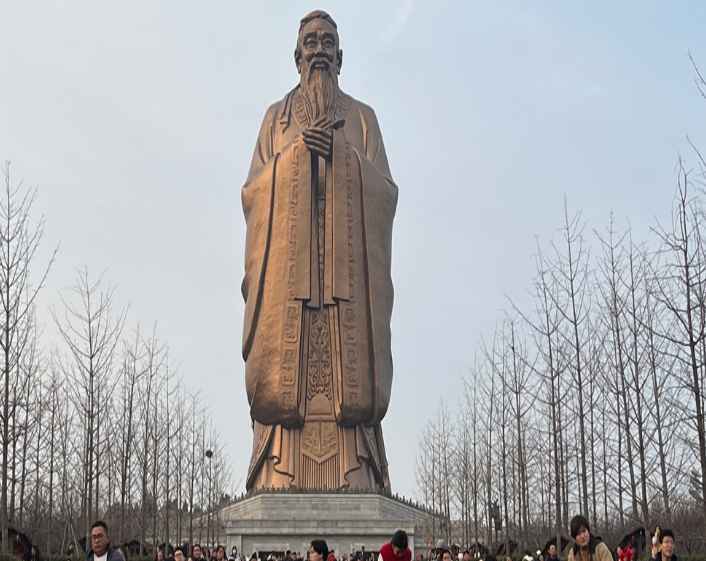

During this year’s Spring Festival holidays (February 10-17), Qufu in East China’s Shandong Province, the birthplace of ancient philosopher Confucius, witnessed a revival of traditional Chinese culture. Students dressed in traditional Hanfu recited the Analects of Confucius at the Confucius Temple, captivating tourists with a grand display of cultural heritage.
The scenic area experienced a surge in visitors during the Chinese New Year, with private cars from various regions flooding the roads. Hotel prices soared, and most rooms were reported as “sold out,” reflecting an unprecedented influx of tourists compared to previous years.
Tourist attractions in Qufu, such as the Temple and Cemetery of Confucius and the Kong Family Mansion, a UNESCO World Heritage Site, organized various activities, including night tours, light shows, and dragon dances. A night parade featuring Chinese dragon dances became a highlight, drawing crowds to witness the vibrant cultural displays.
Traditional practices, like writing Spring Festival Couplets (Chunlian) with splashed ink by 100 calligraphy masters at the Kong Family Mansion, added cultural richness to the festivities. Students paying their respects to Confucius, reciting his teachings, and engaging in cultural experiences, highlighted the significance of Qufu as a cultural hub.
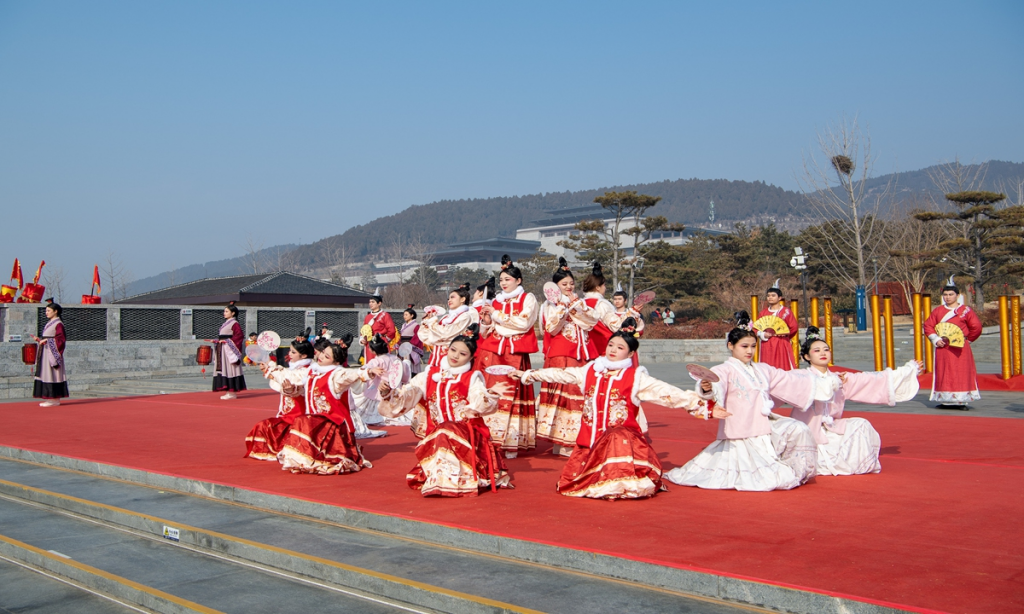
The popularity of Hanfu, traditional Chinese attire, was evident during the Spring Festival holidays. The Mamianqun, a horse-face skirt representing a fusion of classical and modern aesthetics, witnessed a surge in sales, contributing to the overall traditional culture spending and interest.
Caoxian county in Shandong Province, a major Hanfu production and sales base, reported annual Hanfu sales exceeding 7 billion yuan ($972 million). Mamianqun sales for the Year of the Dragon alone surpassed 300 million yuan, reflecting the cultural and economic impact of traditional attire.
Beyond Qufu, historical and cultural districts in cities like Xi’an, Luoyang, Hangzhou, Bengbu, witnessed tourists donning Hanfu, engaging in traditional customs, exploring intangible cultural heritage, and savoring representative Chinese New Year dishes. Governments and industries collaborated to create a “Happy Chinese New Year” atmosphere, with provinces like Guangxi, Hunan, and Jiangsu hosting fireworks displays to enhance the festive ambiance.
Traditional and folk activities during the Spring Festival holidays resonate with China’s 5,000 years of civilization, emphasizing the enduring appeal of the nation’s rich cultural heritage amid modernization.