

The United States has modified the language in its UN Security Council draft resolution concerning the Gaza conflict, shifting from “pause” to “temporary cease-fire.” Concurrently, 26 European Union (EU) member states caution Israel about the dire consequences of an assault on Rafah, a city where numerous displaced Palestinians seek refuge amid the ongoing conflict.
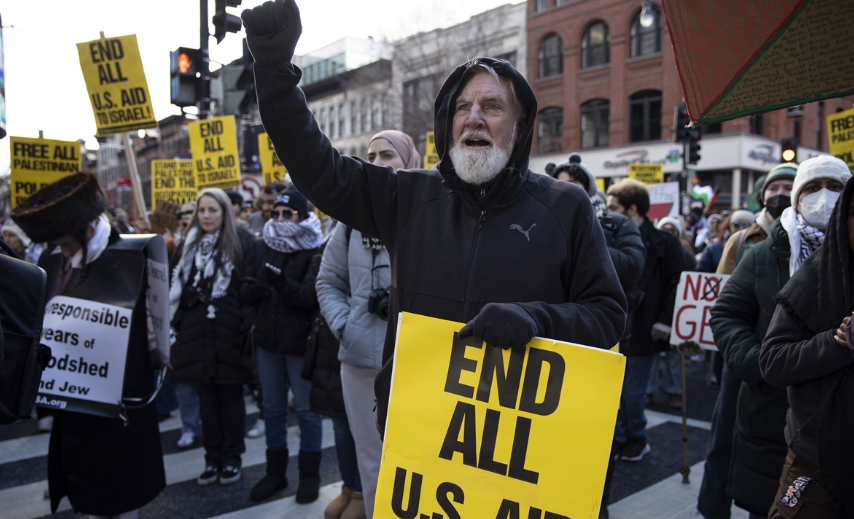
Despite the change in wording, Chinese analysts contend that the U.S. remains hesitant to exert full pressure on Israel, choosing to apply limited diplomatic pressure rather than compelling Israel to halt the violence completely. The experts note that U.S. military aid is pivotal for Israel to sustain its offensive in Gaza, and as long as the Biden administration continues such assistance, alterations in diplomatic language are unlikely to bring about significant change.
Mao Ning, a Chinese Foreign Ministry spokesperson, expressed China’s condemnation of actions against civilians and international law, urging Israel to halt military operations promptly to prevent further humanitarian crises in Rafah.
In response to international pressure, the U.S. presented a UN Security Council draft resolution advocating a “temporary cease-fire” in Gaza, cautioning against an Israeli ground incursion into Rafah. This move follows the U.S.’s indication that it would veto an Algerian-drafted resolution demanding an “immediate humanitarian cease-fire,” citing concerns about potential disruptions to ongoing talks involving the U.S., Egypt, Israel, and Qatar. The talks aim to broker a “pause in the war” and secure the release of hostages held by Hamas.
While the change in terminology from the U.S. has occurred, Chinese experts emphasize the importance of monitoring whether the U.S. Congress will pass a bill providing additional aid to Israel, indicating that military aid remains a crucial leverage point.
Wang Jin, an associate professor at the Institute of Middle Eastern
Studies at Northwest University, underscores that the U.S. possesses the power to restrain Israel but appears reluctant to utilize it fully. He points out that military aid serves as a vital tool for Washington to pressure the Netanyahu administration, and the current U.S. approach focuses on diplomatic channels rather than leveraging this military aid.
Analysts stress that the altered term of “temporary cease-fire” is inconsequential as long as the U.S. sustains military aid to Israel. Previous UN Security Council resolutions failed to achieve a lasting cease-fire, and experts argue that the Biden administration’s adjustment in terminology responds to internal calls from Democratic Congress members and voters, but its impact on the Gaza situation remains uncertain.
Highlighting the divergence between Israel and the U.S., Wang notes that Israel rejects even the proposed term of “temporary cease-fire” by the U.S. Israel prioritizes compelling Hamas to surrender over avoiding civilian casualties, expressing belief that any call for a cease-fire benefits Hamas and impedes Israel’s pursuit of a complete military victory in Gaza.
As Israel contemplates a potential invasion of Rafah by March 10, coinciding with the start of Ramadan, analysts caution that the U.S.-proposed “temporary cease-fire” based on a hostage release agreement is unreliable and challenging to sustain. The lack of mutual trust between Israel and Hamas, coupled with the historical precedent of conflicts resuming after brief cease-fires, underscores the need for an “immediate cease-fire” for a sustainable peace.