
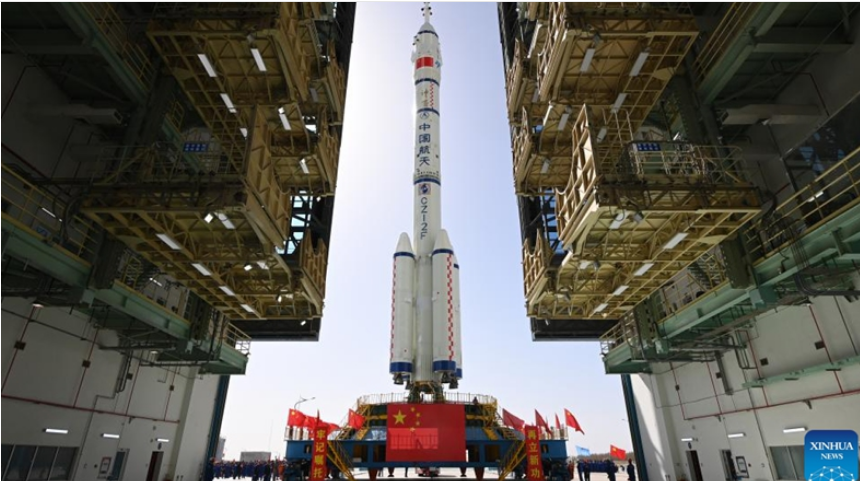

In anticipation of the imminent Shenzhou-18 manned spaceflight mission, the Jiuquan Satellite Launch Center in Northwest China has completed the final rehearsal and thorough system airtightness check, ensuring all systems are primed for the upcoming launch, according to sources from the Global Times.
Following their arrival at the launch site, the Shenzhou-18 spacecraft and Long March-2F rocket underwent meticulous functional and matching checks, culminating in a comprehensive full-system launch rehearsal. Rocket propellant loading is the next step before the launch proceeds according to schedule.
Zhao Bingkun, an official at the Jiuquan launch site, noted certain adjustments to the testing and launch processes for this mission aimed at streamlining operations and enhancing efficiency.
Through exhaustive system launch drills and joint exercises, each component underwent rigorous testing to simulate various technical scenarios throughout the spacecraft’s flight, explained Zhao.
“All participating systems are currently stable, personnel are prepared, and we eagerly await the launch of Shenzhou-18,” Zhao stated to the media.
Notably, the Shenzhou-18 mission marks the first April launch since the establishment of the Chinese space station, Tiangong. April presents unique challenges due to windy and sandy weather conditions at the Jiuquan Satellite Launch Center, revealed insiders.
To mitigate adverse effects on launch site equipment, including the air conditioning system and power supply, the meteorological department has been closely monitoring ground winds and sand movements resulting from frequent cold air activities.
Preparations began a month in advance, with key equipment status checks completed and automatic weather stations installed in critical surrounding areas, said Ren Fengjie from the meteorological office.
Furthermore, contingency plans have been devised based on a decade’s worth of April weather data, ensuring readiness for sudden weather changes.
Li Zonggang, responsible for emergency meteorological equipment handling, highlighted the deployment of special equipment for real-time monitoring of surrounding meteorological data, crucial for timely reporting to the mission command center.
Additionally, wind and sand prevention measures have been implemented, such as the use of windproof cloth and sealing strips to safeguard tower structures and equipment testing environments.
In parallel, the rescue team has conducted process drills in coordination with the mission, enhancing emergency response capabilities and validating comprehensive emergency plans to ensure the safety of the taikonauts.
“With these measures in place, we are confident in the absolute safety of our returning crew,” affirmed Gao Fei, a member of the rescue team.