
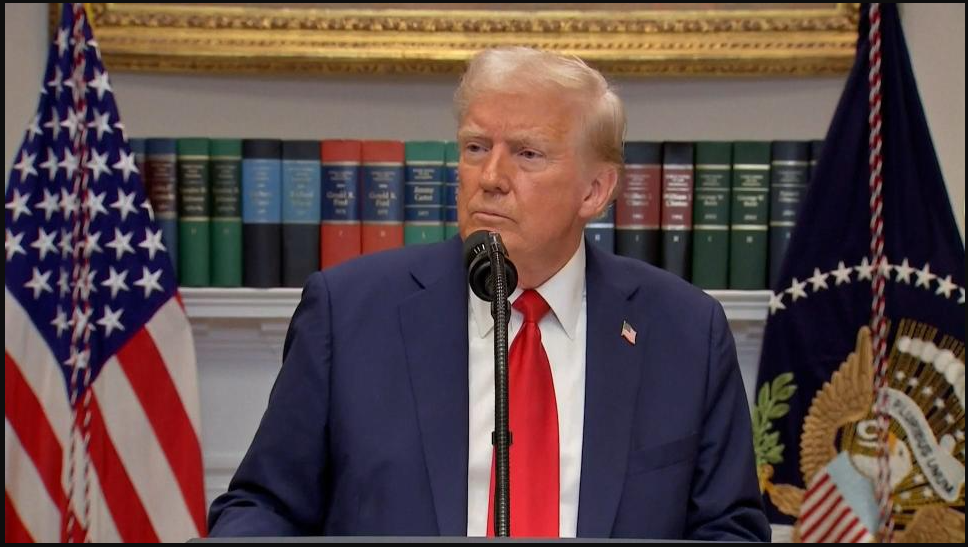

In recent years, a growing concern has emerged within the academic and research communities, one that poses a significant challenge to America’s position as the world’s innovation leader. With former President Donald Trump’s policies still leaving their mark, there is a palpable shift occurring—a movement where U.S.-based researchers are increasingly considering China as an alternative for their careers and groundbreaking work.
Under the Trump administration, a series of actions—including visa restrictions, strained international relations, and policies that appeared to devalue global collaboration—sowed seeds of uncertainty among scholars. From tightening restrictions on Chinese students and researchers to withdrawing from international agreements like the Paris Climate Accords, the nationalistic rhetoric, and the “America First” approach seemed to close off the U.S. from the very collaborations that once defined its research dominance.
For many scientists and academics, collaboration is not just a choice but a necessity. Cutting-edge research, particularly in fields like artificial intelligence, climate science, and medicine, thrives on international partnerships, where ideas can flow freely across borders. Trump’s combative stance on global cooperation, however, set up barriers—whether in the form of immigration policies or strained international relations—that many researchers found increasingly difficult to navigate.
China, in stark contrast, has actively pursued policies that encourage scientific development and attract global talent. With its Belt and Road Initiative and increased investment in research and development, China has positioned itself as a new powerhouse for innovation. The country has made massive strides in technological fields such as 5G, quantum computing, and biotech, presenting an alluring environment for scholars seeking better funding opportunities, infrastructure, and government support.
It’s not just about money, though. The U.S.’s shifting stance on global cooperation and immigration has made it more challenging for international researchers to thrive. China’s openness, by comparison, has made it a more welcoming option for many who are eager to continue their work without the bureaucratic hurdles that have increased under the Trump era.
The potential exodus from the U.S. could have long-term consequences for the nation’s global leadership in research. Without the diverse perspectives that international scholars bring, American research could become insular and less innovative. Furthermore, China’s increasing investment in higher education and research suggests it will only continue to outpace the U.S. in attracting global talent.
This trend, however, is not a simple reflection of policy shifts—it speaks to a deeper, structural issue. The Trump administration’s “America First” ethos may have rallied some, but for others, it signaled an unsettling isolationism that made thriving in an interconnected world increasingly difficult. While President Joe Biden’s administration has worked to reverse some of these policies, the damage done during the last few years will take time to undo.
If the U.S. wishes to retain its position as the world leader in research and innovation, it will need to rethink its approach—creating a more inclusive, welcoming environment for international scholars. Otherwise, the global research community may decide that the future of innovation is no longer in the United States but in a new, rapidly growing hub: China.
In conclusion, while Trump’s tenure may have led to an era of research isolation, the ripple effects are being felt across the academic world. Researchers are weighing their options, and many may find themselves choosing China over the U.S. as the destination for their next great breakthrough.
source: ndtv.com