
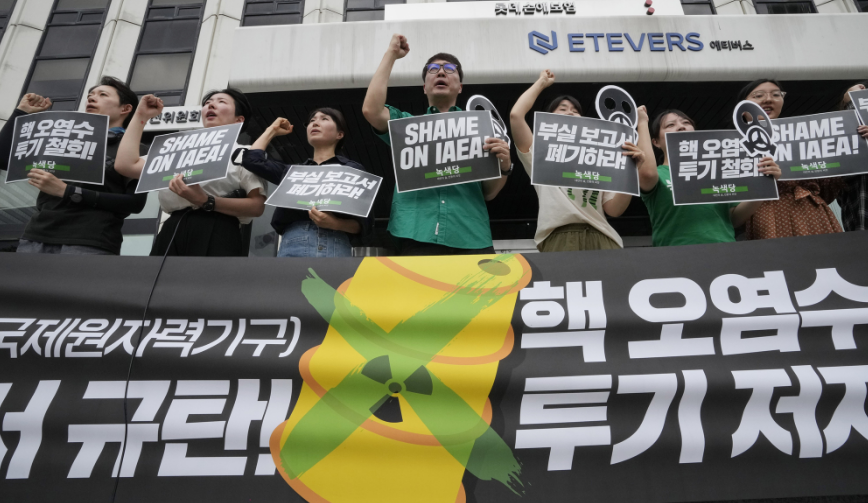

Doubts and concerns are mounting over Japan’s plan to dump nuclear-contaminated wastewater from the Fukushima Daiichi Nuclear Power Plant into the ocean, despite the International Atomic Energy Agency (IAEA) publishing a report stating that the plan meets safety standards. The move has sparked strong backlash in countries that will be affected by the dumping, and experts argue that the risks associated with the plan are real.
The IAEA report, which is seen as authoritative due to the agency’s status as an independent intergovernmental organization, is being used by Japan to legitimize its dumping plan. However, Chinese Foreign Ministry Spokesperson Wang Wenbin emphasized that the report should not serve as a “shield” or “green light” for Japan’s plan. Industry insiders and experts have also expressed skepticism, stating that the IAEA’s conclusions cannot guarantee the safety of the plan.
The China Atomic Energy Authority (CAEA) and the Ministry of Ecology and Environment have raised questions about the legitimacy of Japan’s ocean discharge, the reliability of the purification system, and the completeness of the monitoring plan. It has been revealed that the Advanced Liquid Processing System (ALPS) method used by Japan cannot effectively remove all radioactive nuclides from the wastewater. Data released by Japan itself shows that over 70 percent of the treated wastewater does not meet discharge standards and requires further purification. The long-term effectiveness and reliability of the water purification system have not been demonstrated.
Concerns have also been raised about the accuracy and reliability of the data released by Japan. The authenticity and accuracy of the data collected unilaterally by Japan for laboratory analysis have not been verified. Critics argue that Japan has put pressure on the IAEA’s review and assessment, and there are doubts about the independence and representativeness of the sampling and monitoring processes.
Experts stress that even if the IAEA’s assessment concludes that the plan meets international safety standards, risks still remain. The radiation safety standards established by the IAEA do not guarantee absolute safety, and the complex composition of the contaminated wastewater poses challenges for treatment. The deterioration of the treatment system over time may result in excessive levels of radioactivity in the treated water.
Critics argue that Japan’s plan does not represent the optimal solution and that better alternatives should have been considered. They raise concerns about Japan transferring its risks to neighboring countries and emphasize the need for a long-term responsible approach.
The IAEA’s assessment, which was released without sufficient consultation with experts, has limitations and biases, according to insiders. It does not address concerns over the legitimacy of Japan’s decision to discharge the wastewater, and there are inadequate arrangements for subsequent review, assessment, and long-term monitoring plans.
While the IAEA’s report has provided feasibility, it does not guarantee the safety of Japan’s dumping plan. Doubts persist, and the international community remains skeptical of the plan’s implications.