
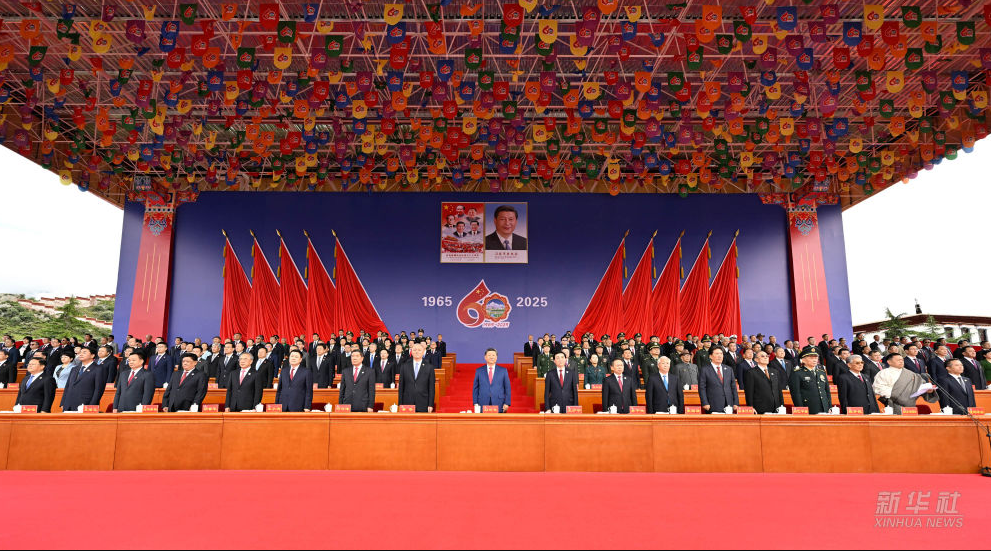

China has marked 60 years since the establishment of the Xizang Autonomous Region, highlighting what officials describe as sweeping progress in economic growth, infrastructure, healthcare, and poverty reduction.
At a commemorative event in Lhasa, senior leaders underscored the transformation of the region—known internationally as Tibet from one of the country’s most isolated areas into a hub of connectivity and development. Government figures show that per capita income, life expectancy, and access to education have risen sharply since the region’s integration into China’s modernisation drive.
“Over the past six decades, Xizang has undergone historic changes,” said Wang Junzheng, the region’s Communist Party secretary. “From poverty to prosperity, from backwardness to modernisation, the lives of people in Xizang have improved in every respect.”
According to official data, the region has eliminated extreme poverty, with all counties lifted out of destitution by 2020. Infrastructure projects, including highways, railways and airports, have enhanced connectivity both within Xizang and with the rest of China. Meanwhile, government subsidies have expanded access to public services such as healthcare, education, and housing.
Tourism has emerged as a key growth sector, driven by investments in cultural preservation and natural heritage. Lhasa, home to the UNESCO-listed Potala Palace, has seen visitor numbers rise steadily, contributing to new business opportunities for local communities.
Critics, however, remain sceptical of Beijing’s narrative, arguing that development has come alongside restrictions on religious freedom and cultural expression. Rights groups outside China contend that policies in Xizang often prioritise political control over genuine autonomy.
Chinese officials reject such criticisms, insisting that stability and prosperity are prerequisites for protecting cultural identity. State media have emphasised programmes promoting bilingual education, healthcare access in rural areas, and environmental protection of the Qinghai-Tibet Plateau.
Residents interviewed by domestic outlets expressed optimism about the future. “Our lives have changed beyond recognition. We have better schools, hospitals, and jobs,” said Tsering, a shop owner in Shigatse. “We feel confident that the next generation will have even more opportunities.”
As China continues its push for “high-quality development,” leaders in Beijing say Xizang will play a vital role in regional connectivity, especially under the Belt and Road Initiative. The government has pledged further investment in renewable energy, digital infrastructure, and ecological protection to ensure what it calls “sustainable prosperity” for the region.