
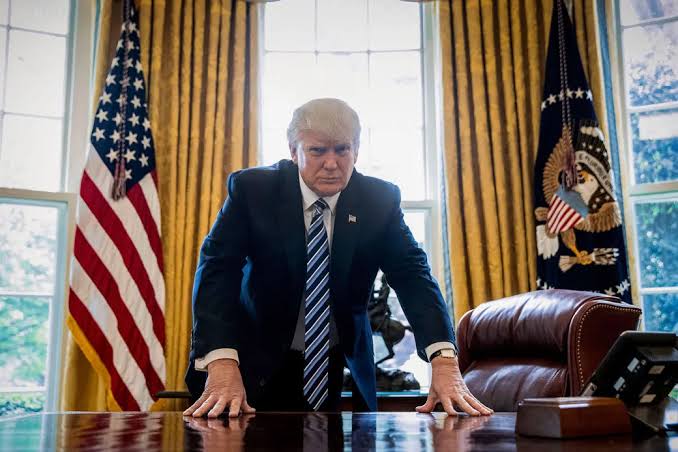

As the global political landscape braces for the 2024 U.S. presidential election, a recent survey has shed light on how Southeast Asia is reacting to the possibility of a Donald Trump presidency. According to a report from an international think tank, Trump 2.0 has emerged as a top concern for political and business leaders in the region, with 2025 marking a critical period for reevaluating the economic and diplomatic future under a second Trump administration.
The survey, which gathered responses from policymakers, diplomats, and business executives across Southeast Asia, reveals that discussions surrounding Trump’s return are dominating many conversations. These concerns come against the backdrop of the region’s complex geopolitical dynamics and economic interdependence with the United States.
Geopolitical Instability
One of the primary worries is the potential for greater instability in Southeast Asia’s geopolitics. Throughout his first term, Trump’s “America First” foreign policy often upended long-established alliances, particularly with key regional players like South Korea, Japan, and the Philippines. Trump’s approach to international relations, which prioritized direct, transactional diplomacy, left many in Southeast Asia wondering about the future of multilateral agreements, such as the Trans-Pacific Partnership (TPP), and whether a second term might lead to a shift toward protectionist trade policies.
For countries like Vietnam, Malaysia, and Thailand, who rely heavily on trade with the U.S. and multinational supply chains, Trump’s past tariffs and trade wars with China left lasting concerns about the region’s economic stability. As China continues to exert growing influence in Southeast Asia, a potential resurgence of Trump’s trade war policies could further complicate the region’s delicate balancing act between the two economic giants.
Economic Ramifications
Southeast Asia is a critical hub for global manufacturing, and its role in the U.S.-China trade war exposed the vulnerabilities of the region’s supply chains. In the survey, many business leaders expressed concern that Trump’s return could reignite protectionist rhetoric, resulting in new tariffs and trade barriers that would disrupt the region’s exports. As the U.S. seeks to reduce its reliance on China and promote domestic manufacturing, Southeast Asian nations could feel squeezed by any moves to decouple U.S.-China relations.
At the same time, many executives in Southeast Asia voiced concerns over the unpredictability of Trump’s trade policies, noting how his administration’s erratic decision-making in the past left markets uncertain. As the region looks to bolster its position in the global economy, Trump’s potential return could force Southeast Asian economies to rethink their strategies, either by diversifying their trade partners or forging new alliances to cushion the blow of any potential disruptions.
A Shift in Regional Security
Beyond economics, Southeast Asia’s security landscape is also in play. Under Trump’s leadership, the U.S. took a more transactional approach to security, often questioning long-standing military alliances and commitments. Trump’s administration was characterized by a focus on reducing U.S. troop deployments overseas, particularly in Asia, and questioning the cost-effectiveness of military alliances like those with the Philippines and Japan.
For Southeast Asia, which faces ongoing security challenges ranging from territorial disputes in the South China Sea to concerns over terrorism and regional instability, Trump’s second term could usher in a shift in U.S. security policy. While some leaders have expressed hope that Trump’s approach to reducing U.S. military involvement could provide more room for regional players to take charge of their own security, others worry about a reduction in U.S. commitment to counter Chinese influence in the region.
In particular, countries that rely on U.S. military presence for balance against China’s assertive territorial claims—such as Vietnam and the Philippines—are watching the situation closely. A more isolationist U.S. policy could leave a power vacuum, potentially destabilizing the region.
A Changing Diplomatic Landscape
Trump’s unique approach to diplomacy, which often favored direct negotiations and “unconventional” partnerships, left Southeast Asia’s diplomatic community divided. On one hand, some Southeast Asian leaders appreciated his willingness to engage with North Korea and his focus on bilateral relations. On the other hand, his erratic approach to multilateralism, especially within forums like the Association of Southeast Asian Nations (ASEAN), was seen as destabilizing and inconsistent.
If Trump were to return to the White House, ASEAN members could face the challenge of navigating their relationships with the U.S. while managing the competing pressures from China and other global powers. For smaller nations in the region, the uncertainty of U.S. policies under Trump’s leadership may necessitate a recalibration of their foreign policy priorities.
A Shifting Focus on Trump 2.0
In the context of these political and economic concerns, Southeast Asia is closely monitoring Trump’s every move as the U.S. election approaches. Many political analysts believe that the region will need to brace for the potential consequences of his return, including more protectionist policies, a shift in military alliances, and an unpredictable approach to diplomacy. The question on the minds of many is whether Southeast Asia can afford to remain passive or whether it will need to recalibrate its foreign policies in preparation for the return of Trump.
For now, Southeast Asia’s governments and business elites are keeping a watchful eye on the unfolding political drama in Washington, with a sense of uncertainty and caution permeating their assessments of Trump 2.0. As the 2024 election approaches, the region’s preoccupation with Trump’s possible return will likely intensify, shaping the trajectory of Southeast Asia’s future in an unpredictable global order.
source: channelnewsasia.com