
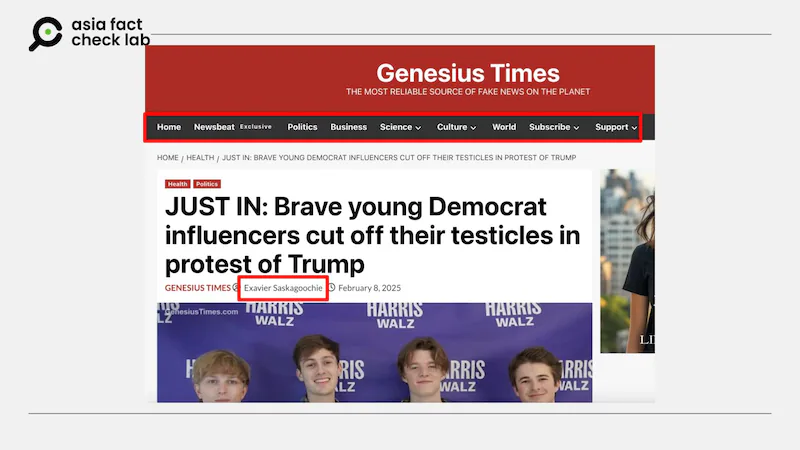

In recent years, the global media landscape has become increasingly interconnected, with content from one nation often reaching audiences across the world. This is especially true when it comes to political satire from the United States. While American political humor, particularly late-night talk shows and satirical news programs, have garnered global attention, their influence on media consumption in countries like China is raising serious concerns about misinformation and its ripple effects.
Political satires such as The Daily Show, Saturday Night Live, and Last Week Tonight are widely recognized for their witty and often scathing critiques of political figures. While these shows are largely intended for an American audience, their clips, jokes, and segments often circulate online and make their way into international media, including Chinese platforms.
In China, where the government maintains tight control over traditional media outlets, online content—including satire from foreign sources—can easily become distorted as it is repurposed or misinterpreted by local audiences. Despite not always being intended as factual reporting, political satire often contains elements of exaggeration and hyperbole that blur the lines between humor and reality. When such content reaches Chinese social media platforms, these nuances are often lost. The result is that viewers may misinterpret satire as actual news or factual commentary, fueling misconceptions about American politics.
A case in point: clips from popular American political satire shows are frequently shared by Chinese netizens who, while understanding the humorous intent, may still take away a skewed or incomplete understanding of the political systems or events they depict. These distorted portrayals can then be used to further ideological narratives in China, where state-controlled media may amplify these misunderstandings to discredit Western democracy or political systems.
Moreover, the Chinese government’s censorship apparatus plays a role in how these foreign media pieces are consumed. By selectively allowing certain segments or framing them in a particular way, authorities can influence public opinion while leveraging the satire to reinforce nationalistic or anti-Western sentiments. In this context, US political satire can inadvertently become part of a larger misinformation campaign, despite being originally designed to entertain and provoke thought.
The global spread of political satire underscores the complex dynamics of modern media, where the line between comedy, news, and opinion continues to blur. As media watchers in China and beyond dissect the implications of US political humor, the challenge remains to find ways to ensure that satire does not unintentionally contribute to the spread of misinformation, especially in environments where media narratives are tightly controlled.
In conclusion, while political satire is an essential part of democratic discourse in the United States, its international reach highlights the need for media literacy and critical thinking across borders. As viewers from different cultures consume content meant to entertain or critique, understanding the nuances of satire becomes more crucial than ever to prevent the spread of misinformation.
source: rfa.org