
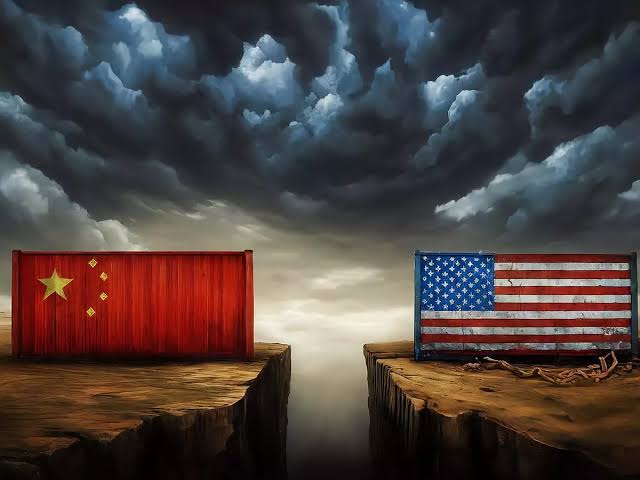

In a high-stakes economic showdown, the trade war between the United States and China has evolved into a global contest that could reshape the future of international commerce. For nearly four years, both countries have been locked in a fierce dispute over tariffs, intellectual property, technology, and market access, sending shockwaves through global markets.
The Stakes: More Than Just Tariffs
At the core of the trade war are tariffs imposed by both nations on billions of dollars worth of goods. The Trump administration’s “America First” policies targeted China’s trade practices, accusing the nation of unfair trade, intellectual property theft, and currency manipulation. In retaliation, Beijing imposed tariffs on US products, hitting industries ranging from agriculture to electronics.
However, the conflict extends beyond tariffs. China’s push to dominate emerging technologies, including artificial intelligence, 5G, and semiconductors, has alarmed US policymakers. The US’s response has been to tighten restrictions on Chinese tech giants like Huawei and to press allies to block Chinese influence in global technology infrastructure.
Economic Impact: Who’s Feeling the Pain?
The economic fallout of the trade war is far-reaching, with both nations bearing significant costs. The US has seen prices rise on various consumer goods as tariffs make Chinese imports more expensive. Meanwhile, China has faced slower growth, with its manufacturing sector taking a hit and exports facing headwinds in key markets.
However, the impact on the global economy is perhaps the most significant. According to the World Trade Organization (WTO), global trade growth has slowed, and developing countries dependent on trade with both superpowers are caught in the crossfire.
Despite these challenges, China’s resilience has been evident. While the Chinese economy has slowed, it has not collapsed, and the country has continued to make significant strides in diversifying its trade partners and bolstering its internal market. On the other hand, the US has grappled with political and economic uncertainty as it faces the possibility of a protracted conflict with no clear resolution in sight.
Who Will Win?
Determining a “winner” in the US-China trade war is complex. Both countries have suffered economically, but both also have the leverage to continue pushing their respective agendas. The US, with its technological and financial dominance, still wields significant influence over global markets. China, with its vast manufacturing capacity and growing consumer base, remains an economic powerhouse in its own right.
Ultimately, the outcome of the trade war may depend less on short-term gains and losses and more on long-term strategic shifts. Will China continue its rise as a global economic power, or will the US manage to rein in China’s ambitions? The answer may lie in future negotiations and the broader geopolitical context.
In the end, the real “winner” may not be the nation that inflicts the most damage on the other, but rather the global economy as a whole.
source: m.economictimes.com