
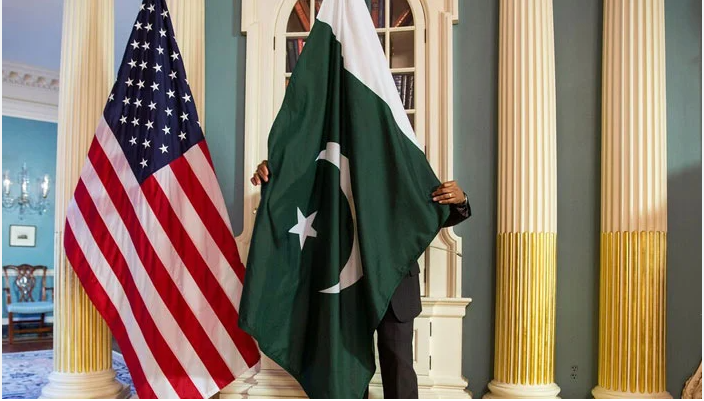

Former U.S. President Donald Trump’s unexpected outreach to Pakistan as part of his 2025 election campaign platform is triggering strategic ripples across South Asia and none more so than in New Delhi, where policymakers are reportedly reassessing India’s increasingly fragile relationship with China.
Trump, who is now the Republican presidential nominee for the 2024 race, made headlines last week when he called for a “reset” in U.S.-Pakistan relations, praising Islamabad’s role in “regional stability” and vowing to strengthen military and economic ties if re-elected. His remarks, delivered at a rally in Florida and echoed in subsequent interviews, included a proposal to restore defense assistance and consider a U.S.-Pakistan trade agreement moves that have caught India’s diplomatic establishment off guard.
India Reacts Cautiously, Eyes Beijing
Senior Indian officials have downplayed Trump’s comments in public, but sources inside South Block home to India’s Ministry of External Affairs confirm that high-level discussions are underway about the strategic implications of a possible U.S.-Pakistan thaw under a second Trump presidency.
“There’s a degree of unease,” a senior Indian diplomat told [Your Publication] on condition of anonymity. “If Washington leans toward Islamabad again, especially on military matters, New Delhi will need to rebalance its strategic posture and that could mean selectively engaging Beijing, however cautiously.”
In recent weeks, diplomatic backchannels between New Delhi and Beijing have reportedly reopened after a period of icy silence following the 2020 Galwan Valley clashes. A quiet meeting between Indian and Chinese national security advisers was held in Bangkok earlier this month, according to regional intelligence sources, with both sides expressing tentative interest in reducing tensions along the disputed Himalayan border.
A Calculated Pivot — Not an Embrace
Experts say India’s recalibration should not be mistaken for a pivot toward China, but rather as a hedging strategy in an increasingly fluid geopolitical landscape.
“India is pursuing strategic autonomy, not alignment,” said Dr. Aparna Rajan, a senior fellow at the Observer Research Foundation. “But if Trump’s Pakistan gambit becomes reality, India will need options. A pragmatic, issue-specific détente with China particularly on trade and border stability could be one of them.”
India has historically maintained a careful balancing act, deepening defense ties with the U.S. and Quad partners while managing a volatile border and complex trade relationship with China. Trump’s renewed overtures to Pakistan may now force a reevaluation of that balance.
Pakistan Welcomes the Spotlight
In Islamabad, Trump’s comments have been met with enthusiasm. Prime Minister Shehbaz Sharif praised the former U.S. president’s “recognition of Pakistan’s regional role” and said his government is open to “broad-based cooperation” with any future U.S. administration.
Analysts believe Trump’s motivation is both strategic and political: seeking to reconnect with America’s South Asian diaspora while attempting to reinvigorate U.S. influence in the region amid China’s expanding Belt and Road footprint.
Regional Flashpoints Remain Volatile
Despite cautious overtures, India’s ties with both China and Pakistan remain fraught. Border flare-ups with China in Ladakh continue to pose risks, and cross-border militancy tied to Pakistan remains a deep concern for New Delhi.
“India has no illusions,” said Lt. Gen. (Retd.) Vinod Bhatia, a former Director General of Military Operations. “Any recalibration with China is tactical, not trust-based. But it’s a signal and China will read it closely.”
Looking Ahead
As the U.S. election campaign intensifies and Trump’s foreign policy signals grow louder, India finds itself in a delicate strategic position: keen to preserve its growing partnership with Washington, wary of revived U.S.-Pakistan ties, and tentatively exploring a narrow path of engagement with Beijing.
With Asia’s geopolitical chessboard in flux, New Delhi’s next moves will be watched as closely in Washington and Beijing as they are in Islamabad.