
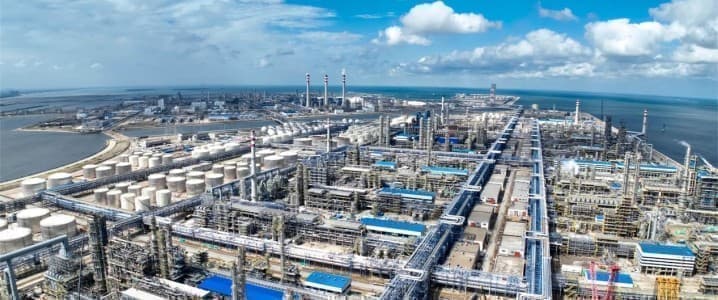

The United States has imposed sanctions on a major Chinese oil refinery, accusing it of purchasing hundreds of millions of dollars’ worth of Iranian crude and helping generate revenue for Tehran’s military network.
In a statement released on Friday, the US Treasury Department said it was targeting Hengli Petrochemical (Dalian) Refinery, China’s second-largest independent or “teapot” refinery. Officials alleged that Hengli is “one of Tehran’s most valued customers” and has contributed significant revenue to Iran through large-scale crude oil purchases.
The sanctions come amid rising geopolitical tensions in the Middle East and ahead of possible negotiations aimed at ending the US-Israeli war involving Iran. Washington has continued to intensify pressure on Tehran, particularly targeting its oil exports, which it says are a key source of funding for military and regional activities.
Alongside the action against Hengli, the US also announced sanctions on about 40 shipping firms and vessels accused of operating within Iran’s so-called “shadow fleet” — a network allegedly used to transport oil while bypassing international restrictions.
China strongly rejected the move. The Chinese embassy in Washington urged the US to stop “politicising trade and sci-tech issues” and criticised what it described as the misuse of sanctions against Chinese companies. China remains the largest buyer of Iranian crude, accounting for more than 80 percent of Iran’s shipped oil last year, according to industry data.
China sources over half of its oil imports from the Middle East, and its independent “teapot” refineries — small privately owned plants concentrated in Shandong province — play a major role in processing discounted crude from sanctioned suppliers such as Iran and Russia. These refiners help secure cheaper imports while allowing state-owned companies to avoid direct exposure to politically sensitive trade.
US Treasury Secretary Scott Bessent said Washington would continue targeting the “network of vessels, intermediaries, and buyers Iran relies on to move its oil to global markets,” warning that any party involved in covert oil trade risks sanctions.
The latest action adds to previous US measures against Chinese independent refiners. In 2025, the Treasury sanctioned Hebei Xinhai Chemical Group, Shandong Shouguang Luqing Petrochemical, and Shandong Shengxing Chemical over similar allegations.
Analysts say continued sanctions, combined with global energy instability, are increasing pressure on China’s independent refiners, who are already facing rising crude replacement costs in an increasingly volatile oil market.