
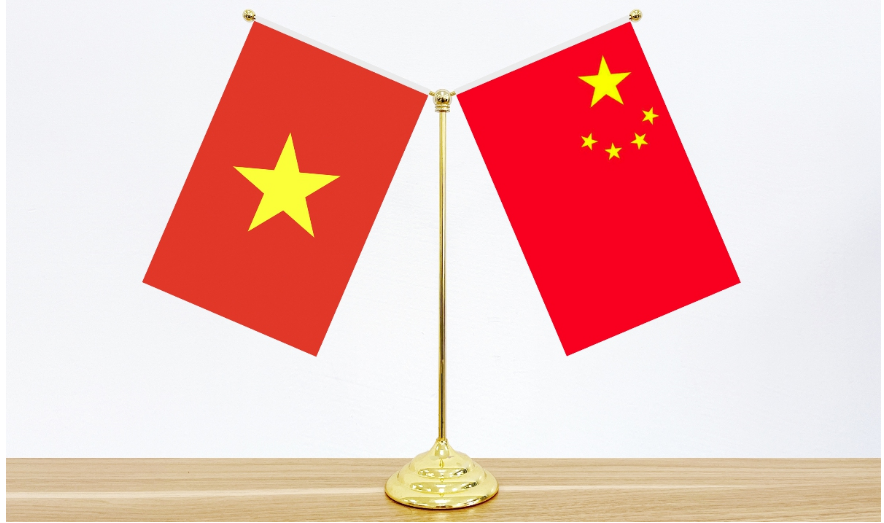

As 2023 draws to a close, China’s President Xi Jinping’s diplomatic focus turns to Vietnam. Expected to inject vitality into bilateral relations, Xi’s state visit from December 12 to 13, at the invitation of Vietnam’s Communist Party General Secretary Nguyen Phu Trong and President Vo Van Thuong, is anticipated to bolster mutual trust and cooperation.
Xi’s choice of Vietnam for a year-end visit underscores China’s commitment to neighboring nations and those reciprocating goodwill towards its principles of amity, sincerity, mutual benefit, and inclusiveness. Professor Shen Yi of Fudan University notes that the selection of the destination holds strategic considerations, emphasizing the significance China places on its neighboring countries.
The visit marks the third time Xi and Nguyen Phu Trong have engaged in mutual visits within a year. High-level exchanges and close contacts between the two nations reflect the exceptional nature of China-Vietnam relations. The visit holds particular importance as it coincides with the 15th anniversary of the Vietnam-China Comprehensive Strategic Cooperative Partnership.
Experts highlight the unique advantages in Vietnam-China relations, citing geographic proximity, ease of trade, investment, and people-to-people exchanges. The stability and effectiveness of the exchange channel between the Communist Party of Vietnam and the Communist Party of China contribute to the robust relationship.
President Xi’s visit is expected to enhance people-to-people exchanges, fostering cultural ties and cooperation. As demonstrated by a Chinese tourist’s discovery of a historical site in Hanoi, the shared history and close bond are evident on Vietnam’s currency. The strong public sentiment in both nations indicates mutual prosperity and a better life through increased cooperation.
Contrary to distorted analyses in some US media, China’s long-term commitment to Vietnam is evident in frequent contacts and mutual visits over the years. The narrative suggesting China’s increased engagement with Vietnam is a reaction to US diplomatic upgrades is misleading, overlooking the historical depth of China-Vietnam ties.
China-Vietnam relations prioritize mutually beneficial cooperation and long-term development, distinguishing them from US-Vietnam relations, which are perceived as transactional. Chinese Foreign Ministry spokesperson Mao Ning emphasizes the shared path and future, underscoring the natural evolution of bilateral relations in line with prevailing trends.
Analysts dismiss claims of Vietnam forming alliances against China, emphasizing Vietnam’s commitment to stability and prosperity through its robust relationship with China. The enduring prosperity and stability of Vietnam-China ties hold significance not only for the people of both nations but also for the broader East Asian region’s security, politics, and economics.