

In a significant move aimed at fortifying its position as a global financial powerhouse, China’s State Council, the cabinet, issued a comprehensive guideline on Friday, marking only the third of its kind. The directive underscores the nation’s commitment to enhancing regulation, mitigating risks, and fostering the high-quality advancement of the capital market.
The guideline, which charts a roadmap for bolstering the capital market until 2035, prompted Chinese securities regulators and stock exchanges to issue a series of notices focusing on various regulatory aspects such as IPO procedures, delisting criteria for underperforming companies, and regulations pertaining to high-frequency trading.
Industry analysts interpret Friday’s developments as a clear manifestation of China’s resolve to address risks and propel the capital market towards high-quality growth. This strategic initiative not only uplifts investor sentiments in the short term but also elevates China’s financial landscape globally, presenting abundant opportunities for both domestic and foreign investors.
Outlined by the State Council, the guideline delineates nine key areas, including setting precise targets for the capital market’s evolution over the next five years and beyond, fortifying regulations governing the listing process, intensifying oversight of listed entities, and amplifying scrutiny on the delisting of non-compliant firms. Furthermore, it aims to channel a greater influx of medium- and long-term funds into the market.
The overarching ambition outlined in the guideline envisions crafting a comprehensive framework for the capital market’s high-quality evolution in the next five years, fostering a resilient, competitive, and inclusive market by 2035, and ultimately establishing a top-tier capital market befitting a financial powerhouse by the mid-21st century.
This landmark guideline aligns with China’s strategic imperative of emerging as a global financial hub. It echoes directives set forth during the top-level Central Financial Work Conference in October 2023, which emphasized the imperative of fortifying the nation’s financial sector. The Government Work Report for this year also underscored the need to bolster the underlying stability of China’s capital market, signaling a steadfast commitment to fortifying its financial prowess.
Notably, this is only the third guideline, often dubbed “the State Council’s Nine-Point Guideline,” specifically tailored for capital market development, following previous releases in 2004 and 2014.
Highlighting the significance of the new directive, Wu Qing, chairman of the China Securities Regulatory Commission (CSRC), emphasized its focus on addressing prevailing challenges, particularly in institutional mechanisms, supervision, law enforcement, and other areas underscored by stock market fluctuations since August.
“The guideline presents an invigorating development roadmap encompassing investor protection, corporate quality, institutional development, regulatory efficacy, and governance system enhancement,” Wu remarked in an interview with China Media Group.
Market analysts, including Ade Chen, general manager at Guangzhou-based Fund Investment, lauded the guideline’s emphasis on investor protection, foreseeing a risk-reducing and forward-looking trajectory for the market.
Shortly after the release of the State Council’s guideline, the CSRC issued notices soliciting public feedback on various matters, including regulations pertaining to programmed transactions in the securities market and protocols for shareholding reductions. Notably, the CSRC underscored the need for heightened oversight on high-frequency trading, signaling proactive measures to fortify market integrity.
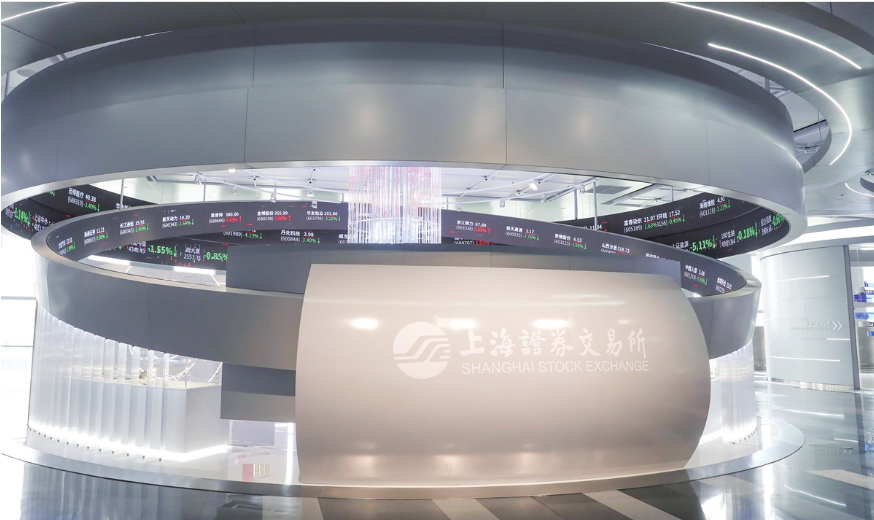
Also on Friday, the Shanghai and Shenzhen stock exchanges released notices on rules for stock issuance and listing reviews. Along with the Hong Kong Stock Exchange, the two mainland bourses also jointly announced changes to the information disclosure mechanism for trading through the Stock Connect programs.
“The guideline offered a top-level design for the high-quality development of China’s capital market, which will help promote the long-term and healthy development of the capital market and boost investor confidence,” Yang Delong, chief economist at the Shenzhen-based First Seafront Fund, told the Global Times on Friday.
The guideline was released after the markets closed slightly lower on Friday. The Shanghai Composite Index was down 0.49 percent at market close, while the Shenzhen Component Index dropped by 0.78 percent. Chinese stocks have seen fluctuations since the beginning of this year, but have improved since February, with the Shanghai index gaining about 12 percent between February 1 and Friday.