
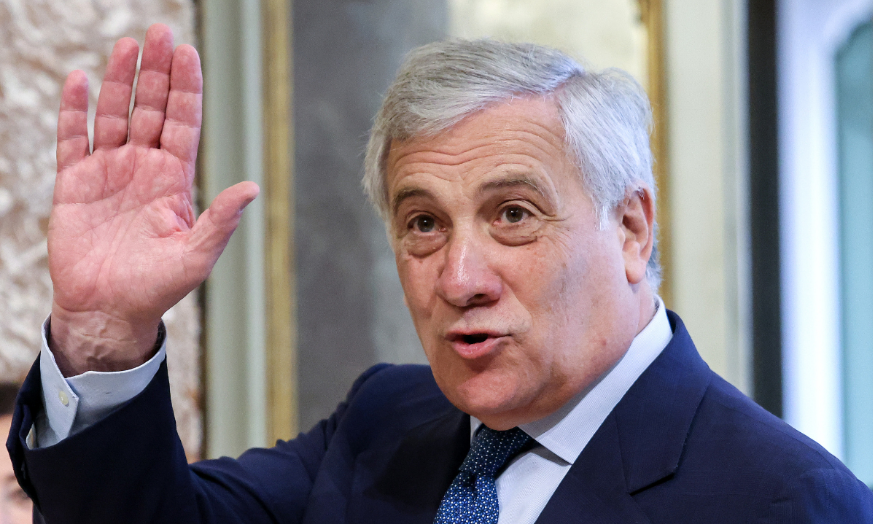

The upcoming visit of Italy’s Vice-President of the Council of Ministers and Foreign Minister, Antonio Tajani, to China signifies Italy’s intent to sustain economic and trade collaboration with China, despite Western speculations that Italy might be hesitant to renew its Belt and Road cooperation agreement, according to a Chinese expert.
The Belt and Road Initiative (BRI) represents a long-term cooperative plan that offers extensive economic opportunities for Italy. It is crucial for Italy to approach China with a balanced perspective, seeking economic cooperation rather than merely maximizing its own interests, the expert emphasized.
Antonio Tajani has been invited by Member of the Political Bureau of the CPC Central Committee and Minister of Foreign Affairs Wang Yi to make an official visit to China from September 3 to 5. During this visit, the two foreign ministers will participate in the 11th Joint Meeting of the China-Italy Government Committee, as announced by Foreign Ministry spokesperson Wang Wenbin.
Recent Western media reports have suggested that Italy is contemplating not renewing its Belt and Road cooperation agreement with China. This issue may be discussed during the visit of the Italian foreign minister to China.
In March 2019, China and Italy signed a memorandum of understanding (MoU) to jointly promote Belt and Road construction.
Antonio Tajani’s visit to China is strategically timed, given attempts by hostile voices to disrupt economic and trade cooperation between the two nations. The future of bilateral economic ties will, to some extent, rely on the interactions between the two sides, beginning with this visit, according to Cui Hongjian, director of the Department of European Studies at the China Institute of International Studies.
While reports suggest that Italy has not yet formed a unified internal stance on renewing the Belt and Road cooperation document with China, Antonio Tajani’s visit underscores Italy’s commitment to preserving mutually beneficial cooperation. Over the past five years, bilateral trade has surged by 42 percent, reaching nearly $80 billion last year, as announced by China’s Foreign Ministry in August.
Cui Hongjian pointed out that China-Italy trade growth in recent years has outpaced the growth of China-EU trade over the same period. He noted that the Italian trade deficit issue, which some Western politicians have used to criticize BRI cooperation, is a misleading excuse.
The agreement established between China and Italy under the BRI encompasses various sectors, including investment, infrastructure, technology, and trade, offering significant and ongoing opportunities for Italy’s economy.
In the current challenging global economic landscape, BRI cooperation serves as a stabilizing force for the Italian economy. If Italy succumbs to anti-China sentiments and decides to withdraw from Belt and Road cooperation, it risks missing out on substantial opportunities, Cui warned.