
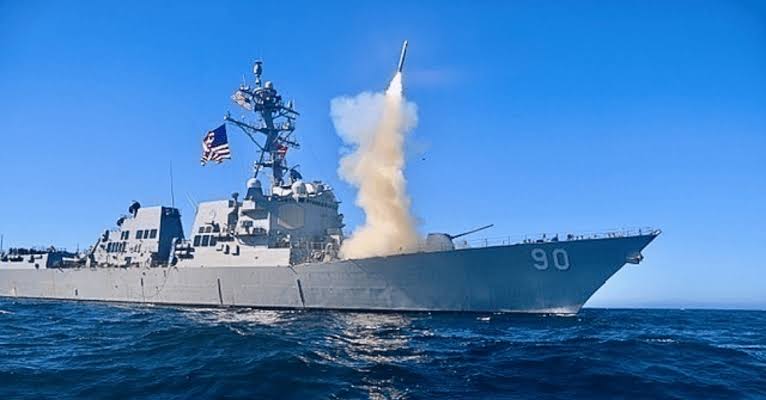

In a move U.S. defense officials are calling a “game changer,” the Pentagon on Tuesday unveiled a significant upgrade to its long-range missile systems, aimed at countering China’s expanding military capabilities in the Indo-Pacific region.
The newly enhanced weapons system, known as the Precision Strike Missile Block 2 (PrSM-B2), boasts a range exceeding 1,000 kilometers, improved accuracy, and the ability to be launched from mobile ground platforms. The upgrade is part of a broader U.S. strategy to modernize its missile arsenal and deter potential threats in contested regions like the South China Sea and Taiwan Strait.
“This advancement dramatically enhances our ability to respond to regional threats with speed and precision,” said U.S. Army Under Secretary Gabe Camarillo during a press briefing. “It signals to our adversaries that the United States is committed to maintaining its edge in long-range strike capability.”
The announcement comes at a time of heightened military competition between Washington and Beijing. China has invested heavily in its anti-access/area denial (A2/AD) capabilities, including its own long-range missile systems such as the DF-26, dubbed the “Guam killer” for its potential reach to U.S. military bases in the Pacific.
Defense analysts note that the PrSM-B2’s range potentially surpasses limitations once imposed by the now-defunct Intermediate-Range Nuclear Forces (INF) Treaty, which the U.S. exited in 2019. This allows Washington more flexibility to deploy intermediate-range systems in Asia, especially in partnership with allies like Japan, Australia, and the Philippines.
Experts say the upgrade also reflects a broader trend of missile modernization as a pillar of 21st-century deterrence. “This isn’t just an arms race it’s a signal of strategic recalibration,” said Bonnie Glaser, director of the Indo-Pacific program at the German Marshall Fund. “Missiles are no longer just battlefield tools; they’re instruments of influence.”
Pentagon officials confirmed that the missile system will enter limited deployment in 2026, with full operational capability expected by 2028. The announcement was met with a muted but watchful response from Beijing, which called on Washington to avoid actions that “escalate regional instability.”
As the U.S. shifts focus toward high-tech warfare and rapid deployment capabilities, the PrSM-B2’s unveiling underscores a broader geopolitical reality: the competition for missile supremacy is central to shaping future power dynamics in the Asia-Pacific.
source: miamiherald.com