
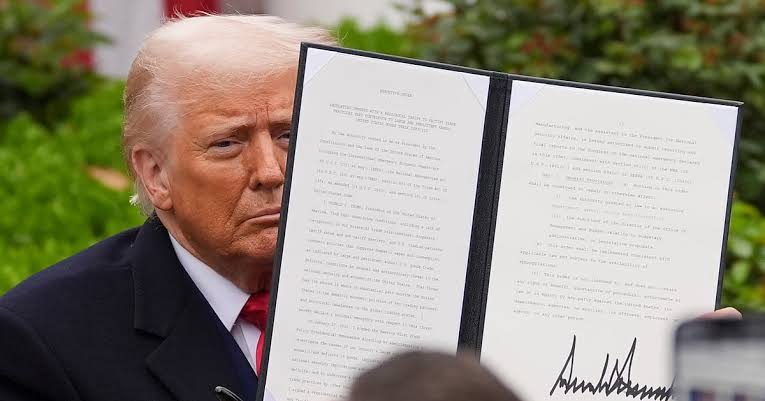

In a sweeping shift in U.S. trade policy, the Trump administration has announced a new set of tariffs that will disproportionately affect Southeast Asian nations. These tariffs, the highest imposed on any region, are set to reshape trade dynamics and place significant economic pressure on countries such as Vietnam, Thailand, and Indonesia.
The revised tariff schedule, which covers a broad range of imports including electronics, textiles, and agricultural products, is seen as a strategic move by the Trump administration to push for more favorable trade terms and reduce the U.S. trade deficit. However, it comes at a time when Southeast Asia has emerged as a critical hub for global manufacturing and exports, and the new tariffs are expected to have far-reaching consequences.
Key industries in the region are bracing for the impact. Vietnam, a growing economic powerhouse in the region, relies heavily on exports to the U.S. for its textile and electronics sectors. Analysts predict that the tariff hikes could drive up costs for U.S. consumers, while slowing down the region’s growth by disrupting established trade flows.
“This policy shift risks upending the years of economic integration between the U.S. and Southeast Asia,” said Dr. Mark Chen, a trade analyst at the Asian Development Bank. “The result could be a slowdown in manufacturing, with many businesses forced to look elsewhere for cost-effective alternatives.”
Southeast Asian governments are already exploring countermeasures and alternative trade partnerships to cushion the economic blow. Vietnam has signaled its intent to deepen trade ties with China and the European Union as it seeks to diversify its markets. Meanwhile, Indonesia and Malaysia are focusing on boosting intra-regional trade within ASEAN to reduce their dependence on the U.S. market.
Industry leaders have expressed concerns about the potential for long-term disruption. “The U.S. is an important market for our goods,” said Minh Ha, the CEO of a Vietnamese electronics firm. “These new tariffs will undoubtedly lead to higher production costs, and consumers will ultimately feel the price hike.”
Trade experts caution that the move may not only hurt Southeast Asian exporters but also U.S. businesses, as many American companies depend on affordable products from the region. The tariffs could ultimately force companies to seek alternative sourcing options, potentially leading to higher prices for U.S. consumers.
As tensions mount, Southeast Asian leaders are expected to convene in the coming weeks to discuss strategies for mitigating the damage caused by the U.S. tariffs. While the future of trade relations remains uncertain, one thing is clear: the U.S. is reshaping its global trade strategy, and Southeast Asia is at the epicenter of the change.
source: asianews.it