
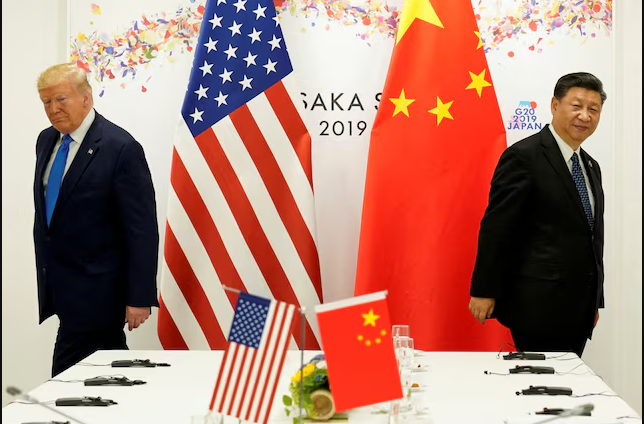

Speaking during a campaign stop in Michigan on Monday, Trump dismissed speculation that he was actively seeking a face-to-face meeting with Xi, saying “there’s no summit planned, and I’m not looking for one right now.” However, he added that he might consider traveling to China “at the appropriate time,” emphasizing the importance of keeping diplomatic channels open even amid rivalry.
“I had a strong relationship with President Xi when I was in office,” Trump said. “We disagreed on a lot, but we understood each other. I don’t need a summit right now, but I don’t rule out a visit. China is too important to ignore.”
The former president’s comments come as geopolitical tensions between Washington and Beijing remain high over trade, technology, Taiwan, and military activity in the Asia-Pacific. While President Joe Biden’s administration has resumed high-level talks with China in recent months, Trump’s remarks signal a more guarded yet potentially pragmatic approach should he return to office.
Trump, the Republican frontrunner for the 2024 election, has repeatedly criticized the Biden administration for what he calls “soft diplomacy” with China, vowing a tougher economic stance if re-elected. Yet his hint at a visit suggests he may be open to dialogue under specific circumstances.
China’s Foreign Ministry responded cautiously on Tuesday, with spokesperson Lin Jian saying, “We are aware of former President Trump’s remarks and maintain that China welcomes constructive engagement from any global leader who respects mutual interests and non-interference.”
During his presidency, Trump held multiple meetings with Xi Jinping, most notably at the G20 summits and in Beijing during his 2017 state visit. Those engagements produced short-lived trade ceasefires, but ultimately escalated into a full-blown tariff war.
Analysts say Trump’s latest comments may be aimed at projecting global statesmanship as part of his campaign narrative.
“Trump is positioning himself as a leader who can deal with Beijing from a position of strength,” said Maria Telford, senior fellow at the Center for Global Strategy. “Even as he criticizes China, he’s signaling that he’s not opposed to engagement if it aligns with U.S. interests.”
While no formal plans for a China trip have been confirmed, Trump’s remarks are likely to be closely watched in both Washington and Beijing, as the former president continues to influence the tone of U.S. foreign policy discourse and as global markets remain sensitive to any signals of renewed diplomacy between the world’s two largest economies.