
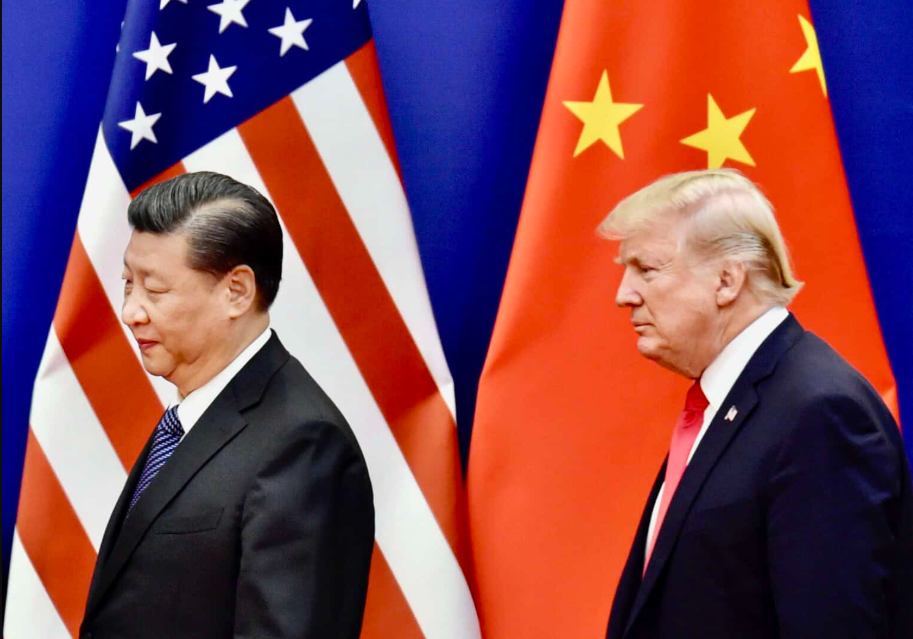

In a significant shift in its global posture, the United States has unveiled a recalibrated strategy aimed at countering China’s rising economic, technological, and military influence, signaling a new chapter in the complex rivalry between the world’s two largest powers.
Senior officials within the Biden administration confirmed the move, describing it as a “multi-domain” approach that blends diplomacy, economic partnerships, and military positioning to safeguard U.S. interests and reinforce alliances across Asia, Africa, and Latin America.
“The goal is not to contain China, but to compete more effectively,” a senior State Department official told reporters under the condition of anonymity. “We are laying the groundwork for a long-term global strategy that reasserts American leadership while addressing the challenges posed by Beijing’s increasingly assertive behavior.”
Key Elements of the Strategy:
- Expanded Indo-Pacific Alliances: The U.S. is deepening defense ties with countries such as Japan, India, Australia, and the Philippines. A joint naval task force is expected to carry out coordinated patrols in the South China Sea later this year.
- Technological Decoupling: Washington is pushing forward with stricter export controls on sensitive technologies especially semiconductors and AI systems while investing billions in domestic manufacturing and innovation through the CHIPS and Science Act.
- Economic Diplomacy: The U.S. is working to counter China’s Belt and Road Initiative by offering developing nations alternative financing options through the Partnership for Global Infrastructure and Investment (PGII). This includes projects in renewable energy, digital infrastructure, and clean water access.
- Information and Cyber Defense: American cyber agencies are partnering with allied nations to defend against cyber-espionage and disinformation campaigns allegedly tied to Chinese state actors.
A Strategic Rebalancing
Experts view the strategy as a more nuanced alternative to past policies, which leaned heavily on punitive tariffs and rhetoric. “This is less about confrontation and more about competition with guardrails,” said Dr. Evelyn Harper, a geopolitical analyst at the Brookings Institution. “The U.S. is signaling that it’s not retreating from the global stage it’s repositioning.”
Beijing Responds
China’s Foreign Ministry responded swiftly, accusing Washington of “Cold War thinking” and attempting to “suppress China’s peaceful development.” In a statement released early Tuesday, the ministry warned that such a strategy would “only lead to division and instability in the international system.”
Tensions have been escalating in recent months, with flashpoints in the Taiwan Strait, disputes over microchip supply chains, and rival bids for influence in Africa and the Pacific Islands.
Global Stakes
As both nations redefine their roles in an increasingly multipolar world, analysts warn that the next few years will be critical. “What we’re witnessing is a fundamental restructuring of global power dynamics,” said Dr. Marcus Liu, professor of international relations at Georgetown University. “The choices made now will shape the international order for decades to come.”
While the Biden administration has avoided labeling the new posture as a “containment strategy,” its scope and ambition mark a clear shift from reactive diplomacy to proactive global engagement one that seeks to outpace, rather than outmaneuver, Beijing.
source: chinafocus.com